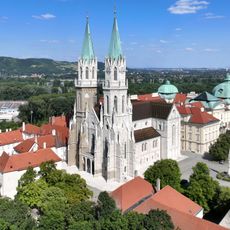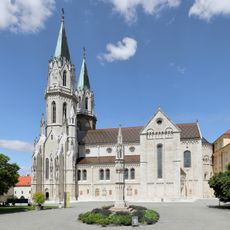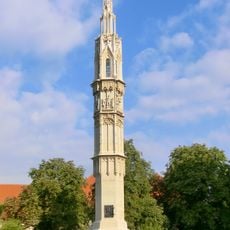
Capella Speciosa, Gothic church building in Klosterneuburg, Austria.
Capella Speciosa was a single-nave, two-bay hall chapel with a polygonal apse, built over a Romanesque predecessor by Burgundian craftsmen using French cathedral Gothic forms. Its walls were partly lined with red and white marble. It stood south of the Stiftskirche in Klosterneuburg and was consecrated in 1222.
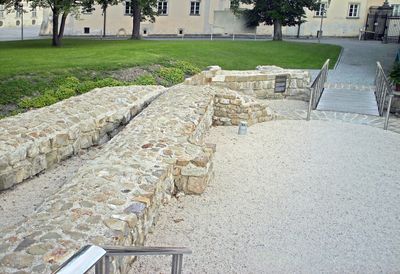
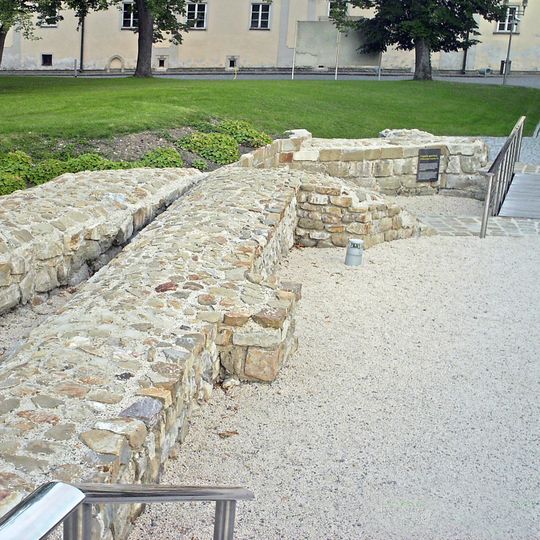
Duke Leopold VI had the chapel built from 1198 as part of his palace complex; Burgundian craftsmen erected it over a Romanesque predecessor and it was consecrated in 1222. In 1339 it passed to Stift Klosterneuburg as a princely gift. Under Josephinism it was deconsecrated in 1787 and demolished in 1799. Its foundations were excavated in 1953, reburied, dug out again in summer 2005 and opened to the public on 6 May 2006.
The chapel shows early Gothic features that were uncommon in Austria at that time. The red and white marble decorations along the apse suggest how richly decorated the interior once was.
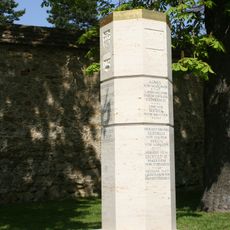
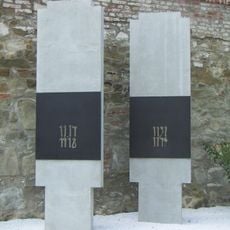
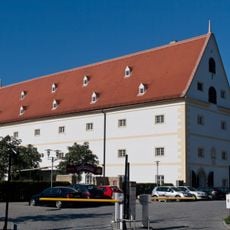
The excavated foundations lie on the Stiftsplatz, just south of the Stiftskirche, and have been open to the public since 6 May 2006. They were uncovered in summer 2005 by the Bundesdenkmalamt after an earlier dig in 1953 was refilled. The site is on the monastery grounds in the centre of Klosterneuburg.
The Gothic sandstone pulpit with tracery parapet, made around 1300, was moved in 1928 to the parish church of St. Wolfgang in Kirchberg am Wechsel. Stained glass showing Leopold VI, the risen Christ and Margravine Agnes reached Laxenburg and now forms part of the Laxenburg window in the parish church of Steyr. Wooden figures of Christ and the apostles from the later 14th century, probably once on the chapel gallery, are kept in the monastery museum.
The community of curious travelers
AroundUs brings together thousands of curated places, local tips, and hidden gems, enriched daily by 94,019 contributors worldwide.