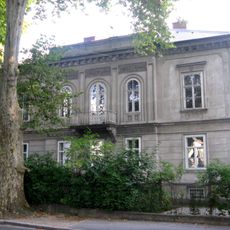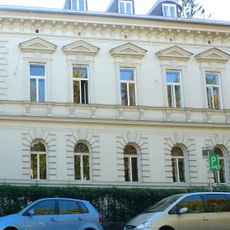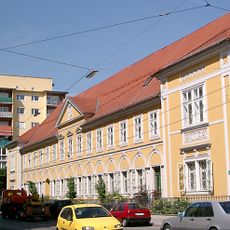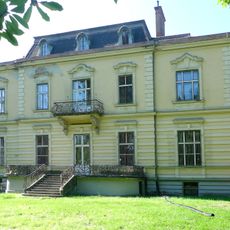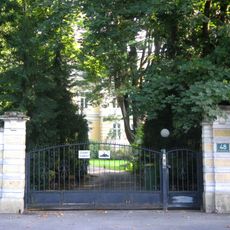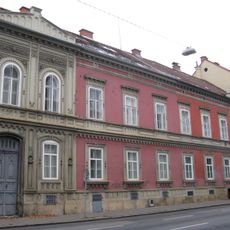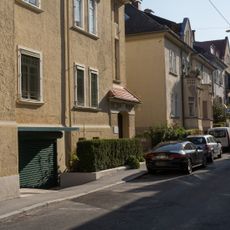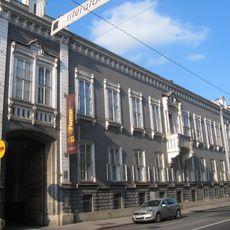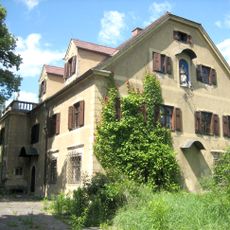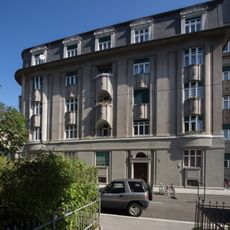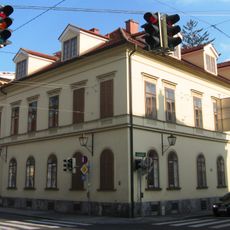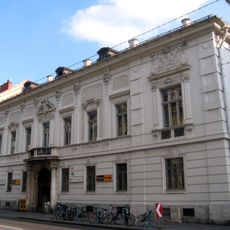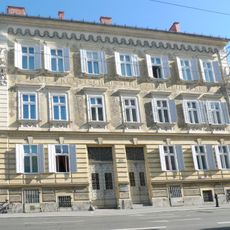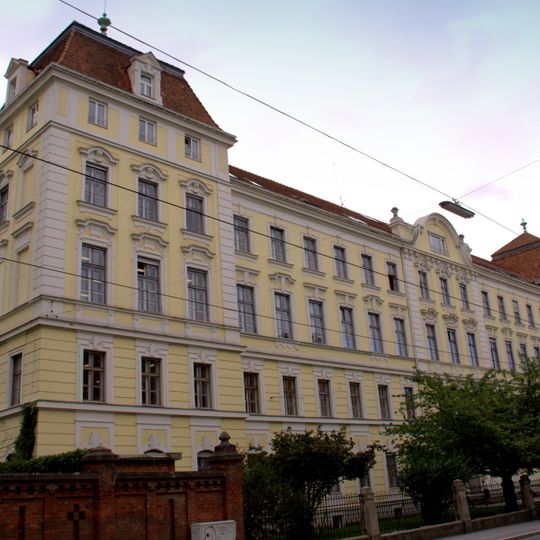
Ursulinenkloster Graz, Catholic monastery in St. Leonhard district, Graz, Austria.
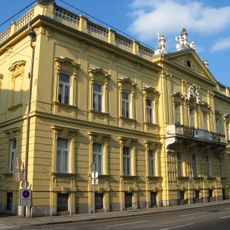
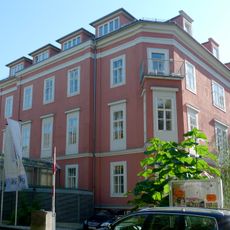
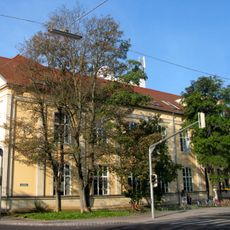
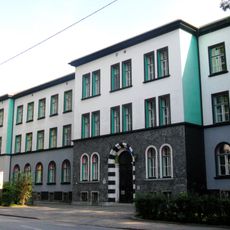
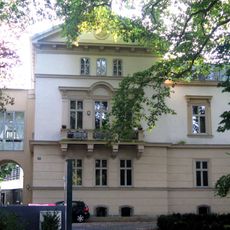
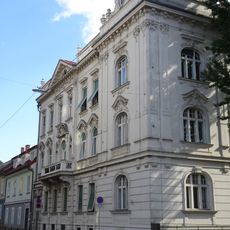
Ursulinenkloster Graz is a monastery building in the St. Leonhard district featuring four stories and neobaroque elements across its facade. Corner pavilions accentuate the structure, giving it a distinctive architectural form.
In 1891 the prince-bishop Johann Zwerger bought a plot in St. Leonhard because the inner city convent had run out of space. Construction began in September 1898 and the shell was finished by January 1899; the Ursulines moved from the Sackstraße to Leonhardstraße a year later. The sisters ran a Volksschule and Bürgerschule through World War I, and in 1930 opened a humanistisches Mädchengymnasium, the school's biggest event since its founding. From 1937/38 most sisters were barred from teaching and the pensionate.
The convent's chapel, dedicated to the Holy Trinity, was redesigned in 1963 to plans by Franz Maitz after its Neo-Renaissance interior was removed; it holds a 1975 Walcker organ from Ludwigsburg. Behind the choir, the Betchor keeps a painting of the Schutzmantel-Ursula by Franz Carl Remp. A wooden figure of Saint Catherine from the 17th/18th century stands before the chapel entrance.
The building currently serves as a private educational institution housing multiple school types from elementary through high school. Public access to the complex is limited since it continues to function as an active school.
The school chronicle records that the most important event since its founding was the opening of a humanist girls' Gymnasium in 1930, when leadership also passed from the nuns to a lay director. In 1937/38 most sisters were barred from teaching and pension work and had to serve in other European Ursuline convents.
The community of curious travelers
AroundUs brings together thousands of curated places, local tips, and hidden gems, enriched daily by 93,010 contributors worldwide.