Wildoner Berg, Mountain summit in Styria, Austria
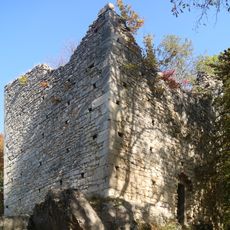
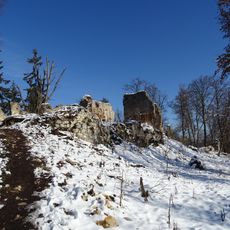
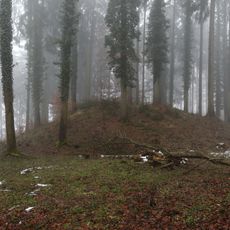
Wildoner Berg is a mountain summit reaching 550 meters in southern Styria, characterized by limestone rock formations and dense beech forests covering its slopes. The mountain sits within a landscape shaped by geological layers that developed over millions of years, creating the terrain visitors encounter today.
Archaeological finds indicate the Buchkogel has been settled almost continuously for 6,000 years, making it one of the most important archaeological sites in the southeastern Alps. In the Middle Ages the long ridge was known as the Hengist; the name survives in the Kulturpark Hengist, founded in 2009 by Lang, Hengsberg, Wildon, Lebring and Weitendorf. In 2015 Stocking and Weitendorf were merged into the market town of Wildon.
The ridge was known in the Middle Ages as Hengist, and the name survives in the Kulturpark Hengist, a cultural association formed in 2009 by Lang, Hengsberg, Wildon, Lebring and Weitendorf. It runs events on the culture, history, biology and geology of the Kleinregion around the mountain.
The summit lies at 550 m, with the Wildoner Schlossberg (450 m) and Bockberg (449 m) forming the same ridge; the eastern slope is the steepest. The beech forest is a protected Naturschutzgebiet, so walkers stay on the marked trails. The shoreline notch of the Miocene sea is best seen where the steep east face levels into the gentler slope.
On the eastern side of the mountain, where the steep drop levels into the gentler slope, the surf-cut notch of the Miocene Pannonian Sea is still visible in the Leithakalk limestone. The ridge itself is a former reef of that sea, and the same limestone underlies the beech woods of the Wildoner Buchkogel nature reserve.
The community of curious travelers
AroundUs brings together thousands of curated places, local tips, and hidden gems, enriched daily by 94,314 contributors worldwide.