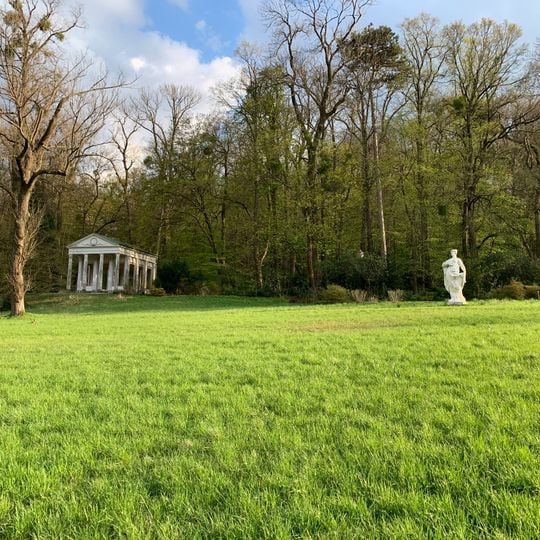
Pötzleinsdorfer Schlosspark, Noble palace park in Vienna, Austria.
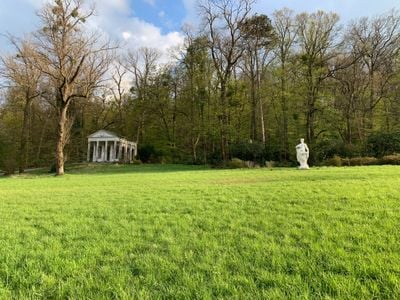
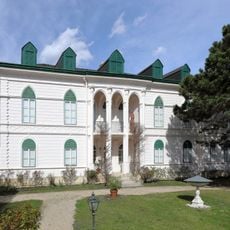
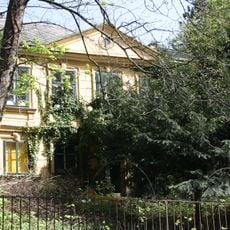
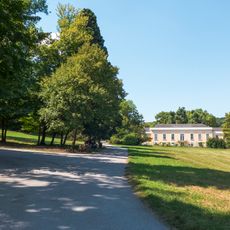
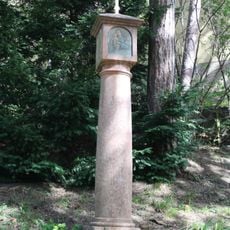
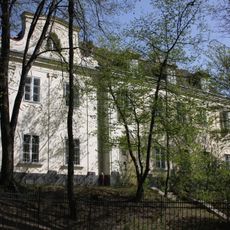
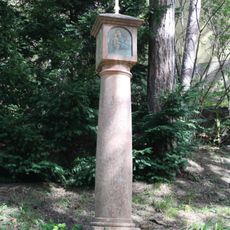
Pötzleinsdorfer Schlosspark is a 354,000-square-metre English landscape garden on the northern slope of the Schafberg in Vienna's Währing district. It holds a classicist pleasure house, a bathing grotto, a memorial stone to poet Johann Baptist von Alxinger, a large camp meadow with playground and petting zoo, an open-air aviary and two small football pitches. The park is fenced and locked from dusk until morning.
Philippina von Herberstein laid out the park in the 18th century, and from 1797 Johann Heinrich Geymüller redesigned it with gardeners Konrad A. Rosenthal and Franz Illner. After the Geymüller bank failed in 1841 it passed through several owners; the furniture maker Max Schmidt, its last private owner, bequeathed it to the City of Vienna, which opened it to the public in 1935. Bombed in World War II, it reopened in June 1949 in the presence of Mayor Theodor Körner.
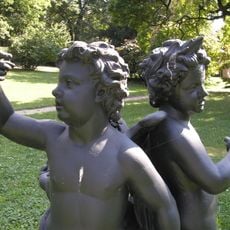
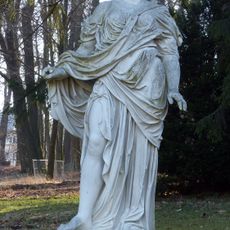
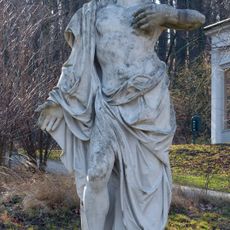
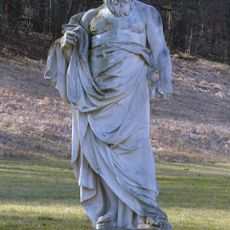
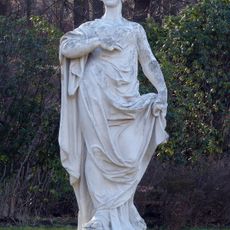
The four limestone figures on the lawn near the park entrance are the "Singing Quartet" (soprano, alto, tenor, bass) from the Ringtheater, carved by Friedrich Steger and installed on the theatre's attic in 1874. After the Ringtheater fire of 8 December 1881, Max Schmidt bought them in 1882 and placed them here, spaced far apart, as figurines on the meadow.
Access hours change with the seasons, so checking ahead helps plan your visit. The park's layout makes it easy to walk between different areas and find facilities suitable for your interests.
The four limestone figures on the lawn are the "Singing Quartet" (soprano, alto, tenor, bass) from the Ringtheater, carved by Friedrich Steger and set on the theatre's attic in 1874. After the fire of 8 December 1881, furniture maker Max Schmidt bought them in 1882 and placed them far apart on the meadow near the park entrance.
The community of curious travelers
AroundUs brings together thousands of curated places, local tips, and hidden gems, enriched daily by 94,244 contributors worldwide.