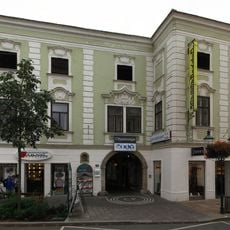
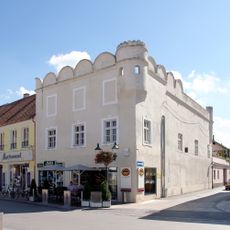
Comagena, Roman military camp ruins in Tulln an der Donau, Austria.
Comagena is a Roman military camp located along the Danube that contains remains of fortification walls, gates, and residential structures from ancient times. Excavations have revealed building layouts, streets, and defensive features that show how this outpost functioned as a working garrison.
Comagena was built in the late 1st century AD, probably under Domitian, as an earth-and-timber camp for the ala I Commagenorum, a cavalry unit of up to 500 men recruited in the kingdom of Commagene in northern Syria. Under Trajan (98–117) it was rebuilt in stone. Coin hoards date two destructions to shortly after 258 and 283, and the fort was destroyed around 400, followed by civilian settlement into late antiquity.
The name derives from the ala I Commagenorum, a cavalry unit recruited in the kingdom of Commagene in northern Syria and posted to the Danube. A building inscription found in 2000 during restoration of the east gate names this unit, confirming that the camp at Tulln was Comagena. A mid-3rd-century Mithras relief found near Tulln records a vow by a man named Verus for the welfare of Comagenis and its inhabitants.
The site can be explored on foot, with the main remains marked by preserved foundations and wall sections. Visiting the Roman Museum in Tulln beforehand helps visitors understand the layout and function of what they will see, as it displays many objects found during excavations.
A building inscription found in 2000 during restoration of the east gate names the garrison: the ala I Commagenorum, recruited from the small kingdom of Commagene in northern Syria. The unit gave the fort its name, and the stone confirms that Roman Tulln is the Comagena of ancient sources.
The community of curious travelers
AroundUs brings together thousands of curated places, local tips, and hidden gems, enriched daily by 93,782 contributors worldwide.