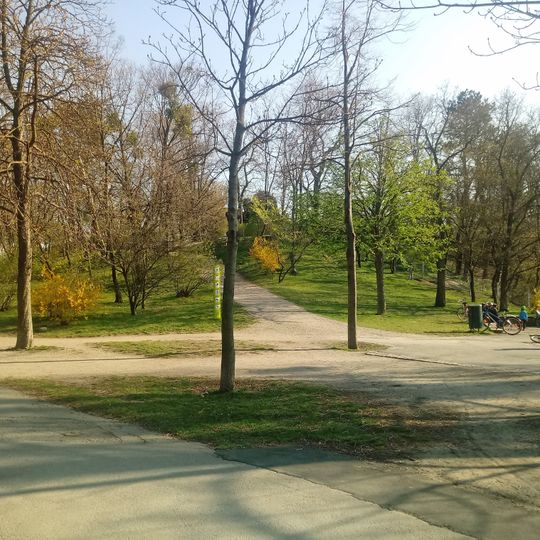
Konstantinhügel, Artificial hill in Prater, Vienna, Austria
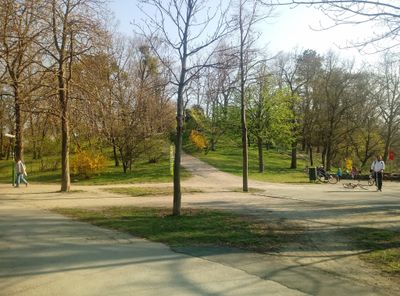
Konstantinhügel is an artificial mound in Vienna's Prater park that rises roughly 7 meters above the surrounding landscape. From the top, visitors can see out across the park and get views of the local terrain.
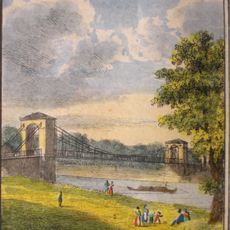
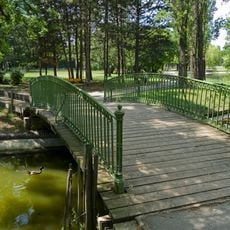
The Konstantinhügel was created from spoil excavated for the Rotunde, the great exhibition hall of the 1873 Vienna World's Fair. It is named after Konstantin zu Hohenlohe-Schillingsfürst (1828–1896), the Obersthofmeister who took part in directing the fair's construction. The Konstantinsteg, opened in 1873 and now a listed monument, leads to the hill.
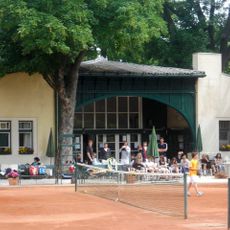
The hill is named after Konstantin zu Hohenlohe-Schillingsfürst (1828–1896), an Obersthofmeister who helped direct construction for the 1873 World's Fair. From 1895 the hilltop restaurant carried the name Sachergarten, after its first tenant Eduard Sacher, and later became the Kaffee-Restaurant Konstantin-Hügel. A club of artists called Konstantinopel planned to revive the building in 1977.
The mound sits south of the Prater Hauptallee at the junction with the Laternenweg. The Konstantinsteg, opened in 1873 and now a listed monument, is Vienna's oldest surviving bridge structure and leads directly to the hill. The adjacent Konstantinteich pond once served for boating.
The historic bridge to the mound dates back to the world fair era and remains one of the oldest bridge structures in the city today. Few visitors realize that this bridge predates many other well-known buildings throughout Vienna.
The community of curious travelers
AroundUs brings together thousands of curated places, local tips, and hidden gems, enriched daily by 94,008 contributors worldwide.