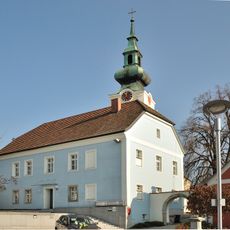
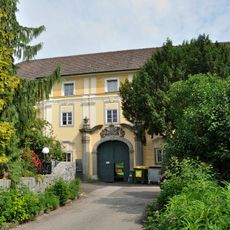
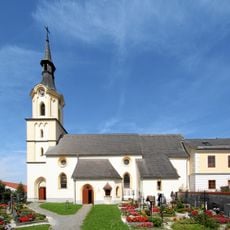
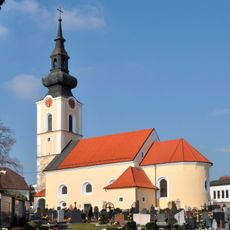
Kürnberg, Mountain summit in Wilhering, Austria.
Kürnberg is a mountain in the municipality of Wilhering, in Upper Austria, rising to about 526 meters (1,726 feet) above the Danube Valley. The summit area is open and offers wide views over the rolling hills and the river below.
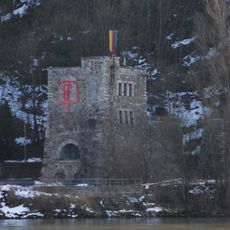
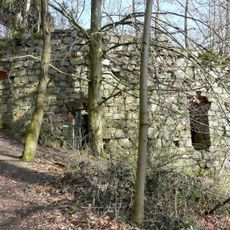
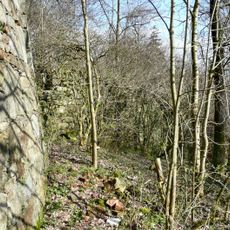
The Kürnberg was settled from the Neolithic period; a hill-grave field on its southwest slope dates to the late Bronze Age Urnfield culture. A double ring-wall on the summit is of uncertain prehistoric date, and Roman remains include a watchtower, a brickworks and a villa rustica. In the 10th century the old walled fort was rebuilt during the Avar and Hungarian wars, and high-medieval castles such as Burg Kürnberg and Burg Wilhering were destroyed in the Liechtenstein Feud.
The mountain's name comes from the Old High German word quirn, meaning mill, recorded as Querinberch in 1154 and Chürnberch in 1349. The many streams on its slopes, such as the Mühlbach that flows around its south side, once powered mills. Visitors can still find the Kaiserbründl, a spring enclosure dating from 1502, in the Hirschleitengraben valley.
Several trails lead to the summit from nearby villages, and signage along the paths is generally clear and easy to follow. The ascent is manageable for walkers with a basic level of fitness, though sturdy footwear is recommended.
The double ring wall on the summit is a prehistoric hillfort with three entrances; its date remains uncertain, and no evidence supports a Celtic oppidum there. The name Kürnberg comes from Old High German quirn, meaning mill, after the streams that once powered mills such as the Mühlbach.
The community of curious travelers
AroundUs brings together thousands of curated places, local tips, and hidden gems, enriched daily by 92,736 contributors worldwide.