Lienzer Klause, Medieval fortress in Leisach, Austria
Lienzer Klause is a fortress ruin in the municipality of Leisach, at the eastern end of the Pustertal where the valley narrows on the left bank of the Drava. It stands on the old Poststraße and consists of thick stone walls, a surviving watchtower in the northern part, a moat around the perimeter, and an entrance path running west to a western gate with the ruins of a portico and an adjoining commercial building.
First documented in 1241 and 1253 alongside Neuenburg Castle, the Lienzer Klause was built by the Bishops of Brixen during conflicts with the Counts of Görz. The counts later took it over, and from the 14th century it also housed a court until 1806. In 1661 the armistice with the Ottomans was cancelled, and Christoph and Elias Gumpp expanded the klause into a fortress with wide bastions facing east in 1664–1665.
The name Klause denotes a barrier or narrow pass, not a border post: the fortress was an inner stronghold of the Görz and later Tyrolean lands. From 1599 local farmers and townsmen were obliged to defend it in emergencies, and in return were freed from Lienz's market monopoly and could sell their produce anywhere in the County of Tyrol.
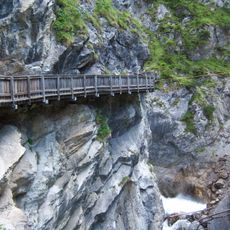
The site is best reached via a hiking trail starting from the Leisacher Hof parking area and crossing multiple sections along the valley. Wear sturdy footwear since the terrain is steep and uneven in places.
A 1599 decree obliged peasants and townsmen to leave their families and defend the Klause in emergencies. In return they were freed from Lienz's market obligation and could sell their own produce anywhere in the County of Tyrol.
The community of curious travelers
AroundUs brings together thousands of curated places, local tips, and hidden gems, enriched daily by 94,030 contributors worldwide.