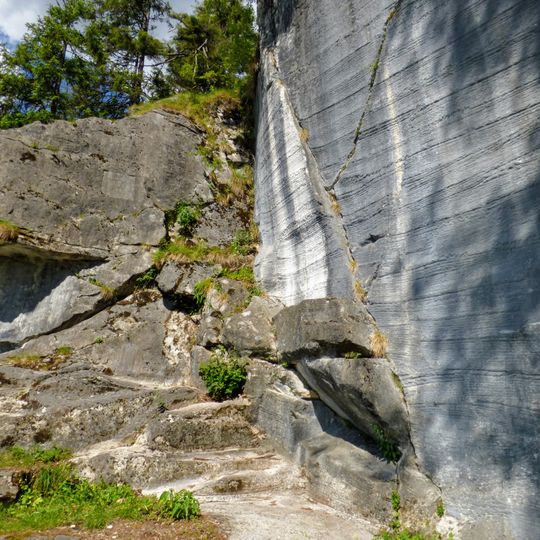
Römischer Steinbruch Spitzelofen, Heritage-listed property in Sankt Georgen im Lavanttal (34812)
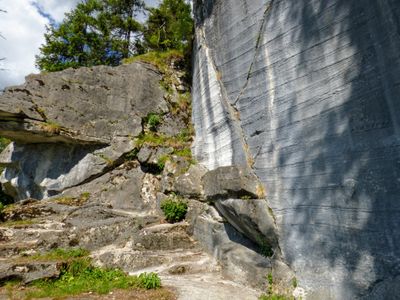
The Römischer Steinbruch Spitzelofen is an ancient marble quarry near Sankt Georgen im Lavanttal in Austria, dating back over 2000 years. The site displays several open pits with rock walls bearing traces of Roman tools, and unfinished marble blocks left behind when work ceased abruptly.
The quarry served as a marble extraction site for the Roman region of Noricum in ancient times. Its sudden abandonment is connected to the migration period in Europe, which explains the numerous unfinished blocks left throughout the site.
The name combines "Spitz", for pointed plots or slopes, and "Ofen", the local word for exposed rock faces warmed by the sun, as Fritz Lochner von Hüttenbach explained. A Roman dedication to deities is cut into the quarry wall twelve metres above the tunnel mouth, its lettering pointing to the 3rd century.
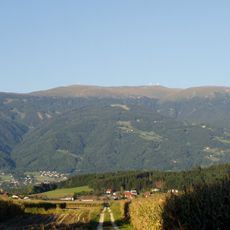
The quarry lies at about 1,060 m on the western slope of the Koralpe, on the Klein-Aibel Alm above Sankt Georgen im Lavanttal. Access is on foot; the terrain is steep and uneven, so sturdy footwear is needed. The site was cleared of trees and partly stripped of soil in 1995, but the quarry floor and walls remain rough ground.
The quarry's marble contains over 98 percent calcium carbonate and is banded white-grey, with graphite, pyrite and pale mica creating its veining. Tools found at the site include a hammer, a double-pointed pick and an iron splitting wedge; later research recorded 36 surviving objects at 22 find spots.
The community of curious travelers
AroundUs brings together thousands of curated places, local tips, and hidden gems, enriched daily by 93,464 contributors worldwide.