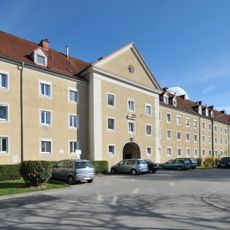
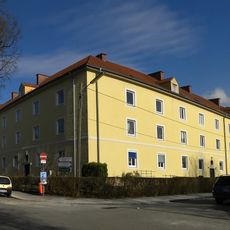
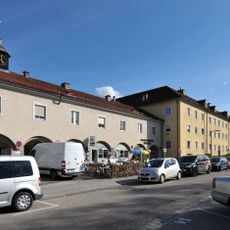
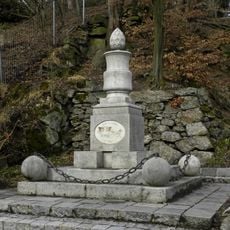
St. Magdalena, Residential district in north Linz, Austria.
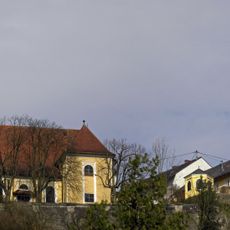
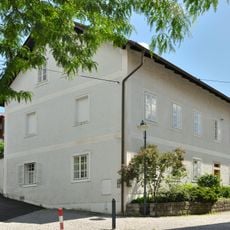
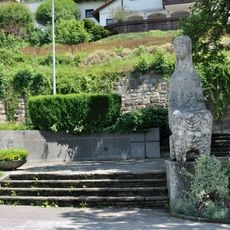
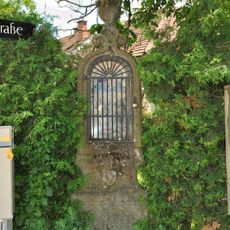
St. Magdalena is a residential district north of the Danube in Linz, named after the Church of St. Magdalena standing on a hillside. The neighborhood combines housing with green spaces and maintains a village-like character within the larger city.
St. Magdalena was first documented around 1110 as Haselbach. The name St. Magdalena, taken from the church on the Magdalenaberg, appears in records from 1482 and fully replaced Haselbach in the 17th century. The community became an independent municipality in 1875 and was incorporated into Linz on 1 November 1938.
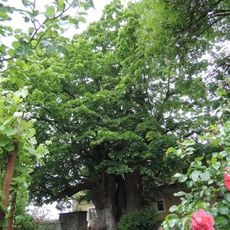
Residents call themselves Magdaleninger. The district name comes from the church on the Magdalenaberg; it first appears in 1482 and replaced the older name Haselbach by the 17th century. The old lime tree next to the church was already described as ancient in 1500 and appears in paintings of the 1832 horse-drawn railway opening.
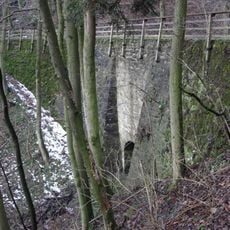
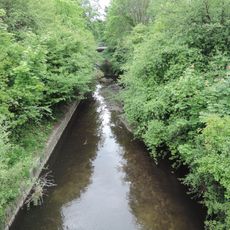
The flat southern villages of Steg, Dornach, Furth and Katzbach lie on former Danube floodplain and were hit by the 1954 flood; the northern villages climb the Mühlviertel foothills. The Haselgraben forms the western boundary toward Lichtenberg and Pöstlingberg. The old horse-drawn railway route survives partly as the Pferdebahnpromenade.
The old lime tree beside the church was already recorded as a strong tree in 1300 and called an antiquity by 1500. It appears in paintings, including one of the 1832 opening of the horse-drawn railway, and still stands in the garden behind the former inn.
The community of curious travelers
AroundUs brings together thousands of curated places, local tips, and hidden gems, enriched daily by 92,632 contributors worldwide.