Enable Location

We need your location to show you interesting places around you

Discover nearby places

Find interesting locations and hidden gems around you

Precise directions

Get accurate directions and distances to places

Your location is never shared with other users. It's only used when you tap the location button.

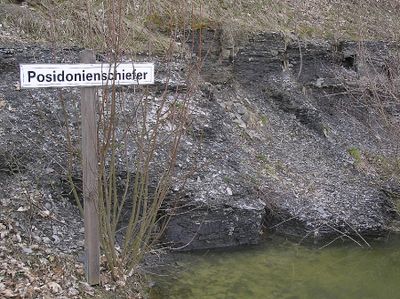
Posidonia Shale

Log in to your account

Start exploring — it's free

Trusted by 61,988 travelers worldwide

Continue with Google
Continue with Apple
or

We will send you a code to connect

By continuing, you accept our Terms and Conditions and our Privacy Policy

Check your inbox

We've sent a pincode in your inbox. Please enter the code below.

Posidonia Shale

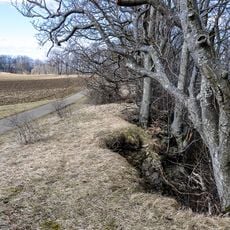
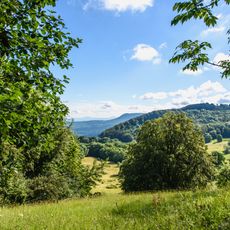
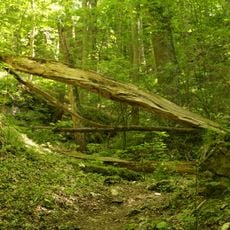
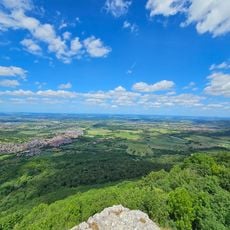
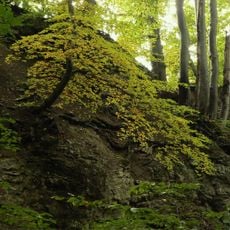
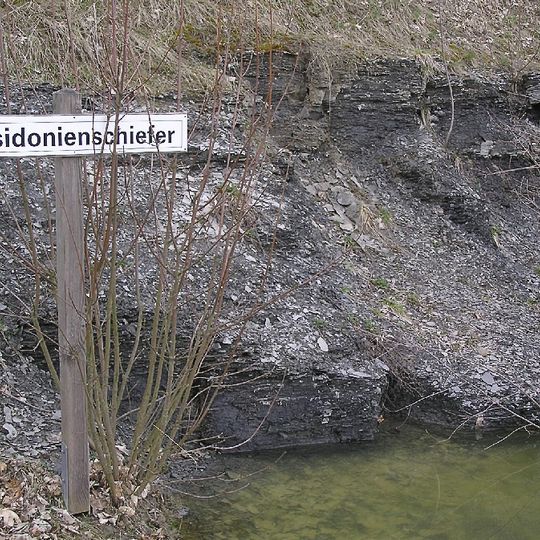
Posidonia Shale, Jurassic geological formation in Holzmaden, Germany

Posidonia Shale is a Jurassic rock formation in the Holzmaden area of southwestern Germany composed of black shale layers interspersed with bituminous limestone. These rocks formed roughly 183 million years ago in a tropical seabed and vary in thickness from 1 to 40 meters depending on the location.

The first fossils from these layers were recorded in 1598 by Johannes Bauhin, marking the beginning of centuries of paleontological study. Since then, the formation has become one of the most important sources of information about ancient marine reptiles and their world.

The formation holds deep significance for Holzmaden's identity, as fossils from these layers have drawn scientists and collectors for centuries, shaping how people understand ancient life. Today, these specimens remain central to local museums and research, reflecting the enduring fascination with what lies beneath the ground.

Fossils from the formation are best seen in museums like the Urweltmuseum Hauff rather than in active quarries, which may have restricted access. Visiting during warmer months allows for better conditions if you want to explore quarry areas on foot.

Fossils in this formation occasionally preserve soft tissues and internal organs of marine reptiles, a rarity in the fossil record that provides extraordinary insight into their anatomy. Some specimens of Stenopterygius contain unborn young, offering direct evidence of how these creatures reproduced millions of years ago.

The community of curious travelers

AroundUs brings together thousands of curated places, local tips, and hidden gems, enriched daily by 60,000 contributors worldwide.

Start exploring
Part of
Altena Group
GPS coordinates
48.57667,9.51833
Latest update
December 10, 2025 15:46
« Posidonia Shale - Jurassic geological formation in Holzmaden, Germany » is provided by Around Us (aroundus.com). Images and texts are derived from Wikimedia project under a Creative Commons license. You are allowed to copy, distribute, and modify copies of this page, under the conditions set by the license, as long as this note is clearly visible.

Discover hidden gems everywhere you go!

From secret cafés to breathtaking viewpoints, skip the crowded tourist spots and find places that match your style. Our app makes it easy with voice search, smart filtering, route optimization, and insider tips from travelers worldwide. Download now for the complete mobile experience.

Around Us App Screenshot

A unique approach to discovering new places

Le Figaro

All the places worth exploring

France Info

A tailor-made excursion in just a few clicks

20 Minutes

Around Us
Travel Guide & Maps
Download

Send to your phone

QR Code
1

Open the camera app on your mobile.

2

Point at the QR code with your camera. A notification will appear.

3

Tap the notification to open the link.