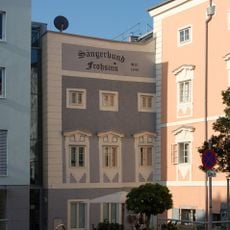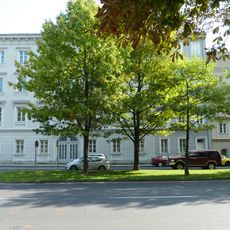
Prunerstift & altkatholische Kirche Hl. Drei Könige, Linz, Protected church building in Linz, Austria.
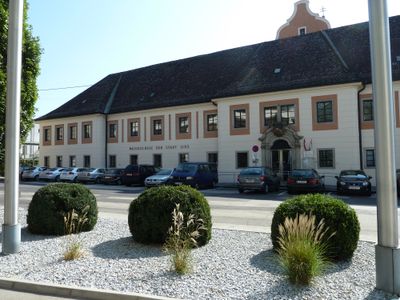
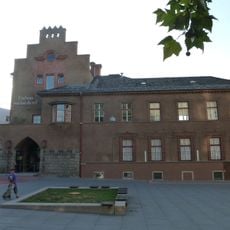
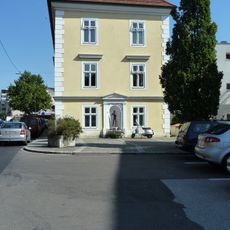
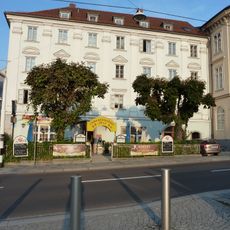
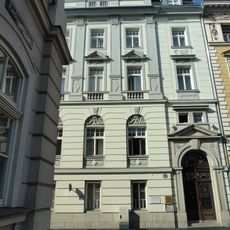
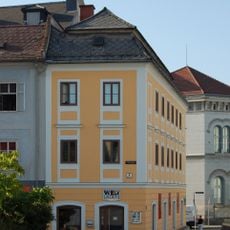
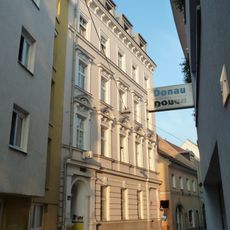
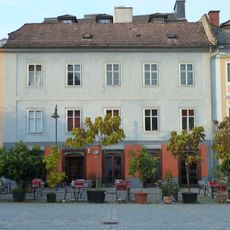
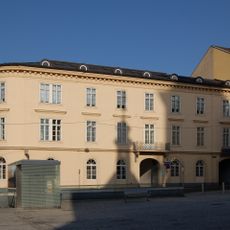
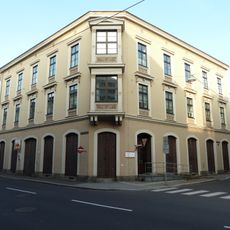
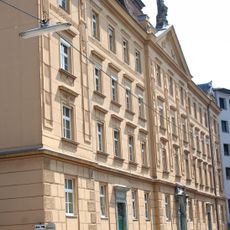
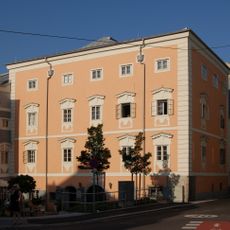
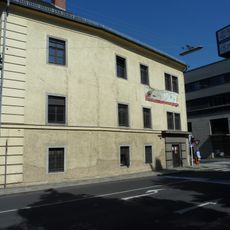
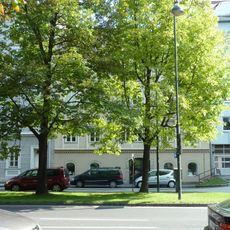
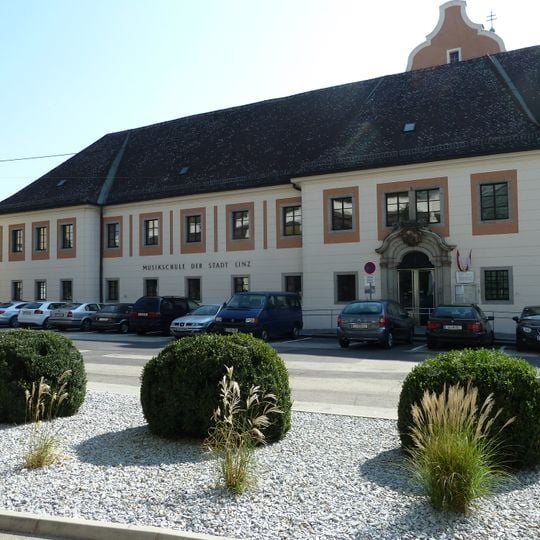
The Prunerstift stands at the corner of Fabrikstraße 10 and Prunerstraße 1, built from 1737 on the site of the demolished Schloss Egereck, whose stone was reused. The two-storey foundation building encloses two inner courtyards, once holding fountains that no longer exist; side wings held single rooms for the Pfründner and flats for the chaplain and administrator. The church, with three altars, is incorporated into the complex.
Johann Adam Pruner, mayor of Linz, drew up his will in 1730 and died in 1734; it funded a foundation for the poor and orphans of Linz. The building at Fabrikstrasse was erected from 1737 on the site of Schloss Egereck, whose demolition material was reused, and was handed over to its purpose in 1739. The first residents, 27 poor men, 27 poor unmarried women and 27 orphan boys, moved in on 6 January 1740. Under Joseph II's reforms the foundation's care work was dissolved from 1786, and the endowment capital was lost to inflation in 1922.
The church, consecrated to the Holy Three Kings, has three altars as stipulated in Pruner's 1730 will, one of them dedicated to the Magi. The number 27 recurs throughout the foundation: 27 orphan boys, 27 poor men and 27 poor unmarried women were to be supported. Local tradition links this number to a dream in which the founder was saved from drowning at sea.
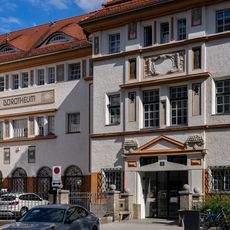
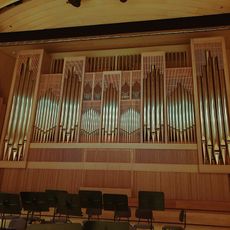
The complex has housed the Linz Music School since 1979, while the church remains in active use as an Old Catholic worship space.Visit times depend on school activities and religious services, so checking beforehand is wise.
The baroque main facade on Fabrikstrasse conceals a church design that extends perpendicular behind it.Painted architectural illusions inside create the impression of greater spatial depth than actually exists.
The community of curious travelers
AroundUs brings together thousands of curated places, local tips, and hidden gems, enriched daily by 92,636 contributors worldwide.