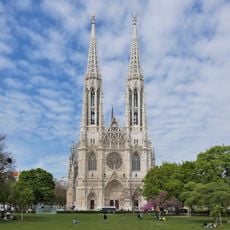
Schwarzspanierkirche, Protected church in Alsergrund, Vienna, Austria
The Schwarzspanierkirche is a protected building in Vienna featuring a three-part facade across two floors, influenced by Il Gesu-style architecture. Today its main facade is integrated into the Albert Schweitzer House, a Protestant student residence.
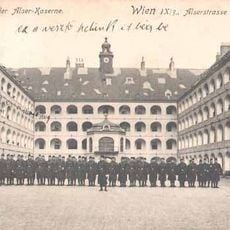
Emperor Ferdinand II laid the foundation stone of the Benedictine monastery church in 1633; it was completed in 1639 and destroyed in 1683 during the Second Turkish Siege. Leopold I laid a new foundation stone in 1690, and Archbishop Sigismund von Kollonitsch consecrated the church in 1739. From 1861 to 1918 it served as Vienna's Protestant garrison church; after 1938 it was used as a Wehrmacht church until bomb damage in 1944.
The building next door at Schwarzspanierstraße 15, not the church itself, is where Ludwig van Beethoven died in 1827; Otto Weininger died in the same house in 1903. The church's own name comes from the Benedictine monks of Montserrat, called "Schwarzspanier" for their black habits, who founded it in 1633. From 1930 to 1938 Orthodox services were held here.
Only the main facade survives, set into the Albert Schweitzer House at Schwarzspanierstraße 13, which opened on 25 October 1966 and was renovated in 2007. The building now serves as a Protestant student residence and event centre, so the facade is best seen from the street; the church interior no longer exists.
The ceiling paintings by Antonio Pellegrini were hidden under layers of paint for decades and were rediscovered during restoration work in 1939. These artistic works reveal how valuable details can lie concealed beneath deterioration.
The community of curious travelers
AroundUs brings together thousands of curated places, local tips, and hidden gems, enriched daily by 92,633 contributors worldwide.