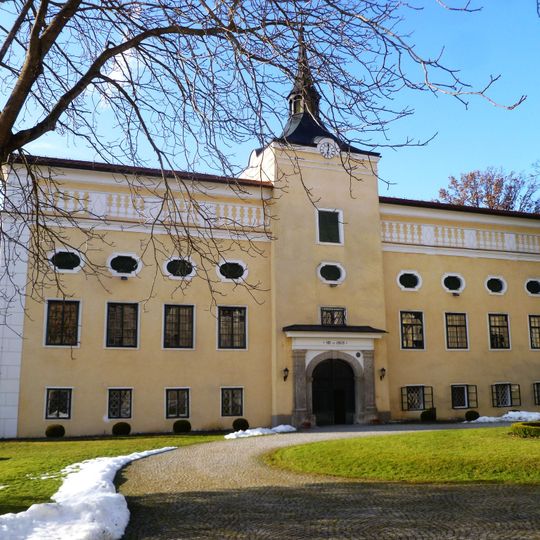
Schloss Kremsegg, Medieval castle in Kremsmünster, Austria
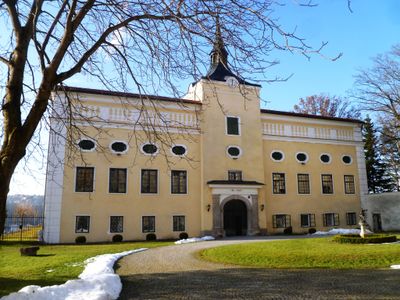
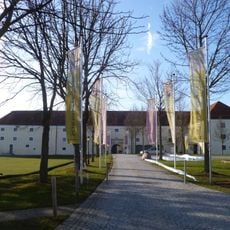
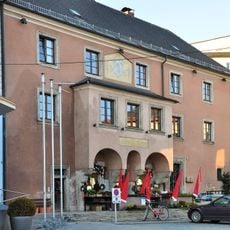
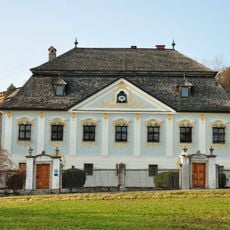
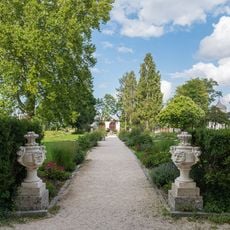
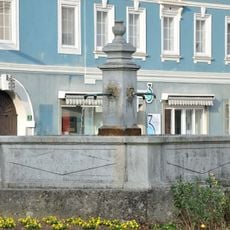
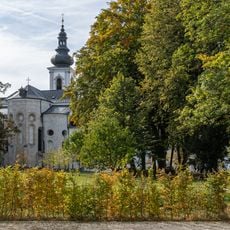
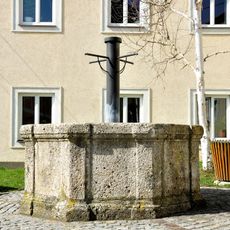
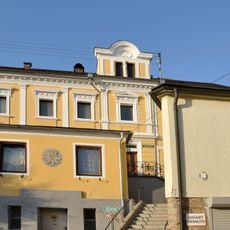
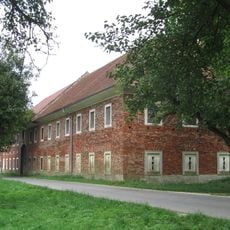
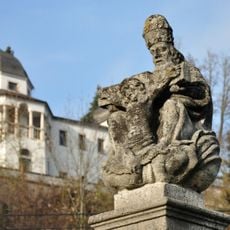
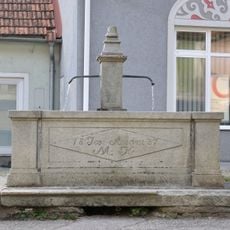
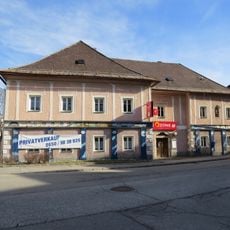
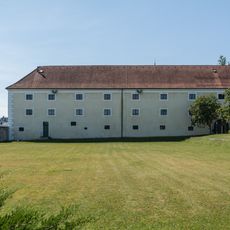
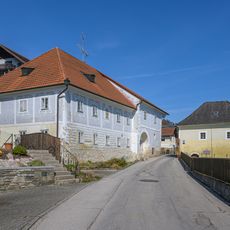
Schloss Kremsegg is a two-storey, four-winged castle in Kremsegg, part of Kremsmünster. An avenue leads from the Kremsmünster–Bad Hall road to a gatehouse bearing the coat of arms of Abbot Anton Wolfradt; the gate passage opens onto a small courtyard with a fountain showing a huntsman blowing a hunting horn with a dog. The central risalit over the gate is the remnant of a tower demolished in 1803, and the courtyard has arcades, glazed on the upper floor, with a sundial on one side.
The first documented record dates to 1235 when the Rot family built a noble estate on a hill overlooking the Krems. During the 17th century, the monastery of Kremsmünster acquired and maintained the property for centuries.
From 1996 to 2018 the castle housed a musical instrument museum run by the association Musica Kremsmünster. Its core was over 1,200 brass instruments collected by the trumpeter Franz Xaver Streitwieser, financed by his wife Katherine from General Motors family assets. Paul Badura-Skoda lent pianos from 2001, and Hans Pizka's horn collection followed in 2007. The museum closed on 31 December 2018.
The building requires advance arrangement for visits since it is not freely open to the public on a daily basis. The site is best reached by train from Linz or by car via the A1 highway, depending on your preference.
Above the gate is the coat of arms of Abbot Anton Wolfradt, who acquired the estate in 1627 and became Prince-Archbishop of Vienna in 1631. In the courtyard, a fountain carries a figure of a hunter blowing a hunting horn, accompanied by a dog.
The community of curious travelers
AroundUs brings together thousands of curated places, local tips, and hidden gems, enriched daily by 93,625 contributors worldwide.