Pfarr- und Wallfahrtskirche Dürrnberg, Catholic parish and pilgrimage church in Dürrnberg, Hallein, Austria
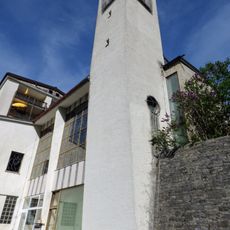
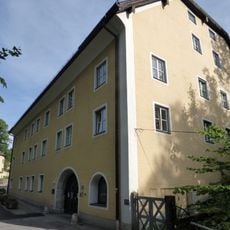
The Pfarr- und Wallfahrtskirche Dürrnberg is a single-nave Renaissance church with a campanile, consecrated in 1614. Its polished marble was said to mirror worshippers, earning it the nickname "glass church". A portal of 1619 in front of the church follows a design by Domenico Fontana for Santa Maria Maggiore in Rome. Between 1729 and 1732 a new vault was inserted about three metres lower after the outer walls had been pushed apart.
A church at Dürrnberg is documented from 1347, and a later building of 1498 was demolished on the order of Archbishop Wolf Dietrich von Raitenau. The replacement, planned with court architect Andrea Bertoletti, was begun in 1596 and consecrated on 19 October 1614 by Markus Sittikus. From 1680 Augustinian Hermits served the church; it became a parish in 1857.
Pilgrims came seeking revival of dead children, healing by applying oil from the sanctuary lamp, and protection from plague. Votive gifts included used crutches, carved or wax lungs, and burst firearms. Saalfelden citizens, spared from the 1600 plague through the Madonna's intercession, donated a candle every sixth year that burned for one year.
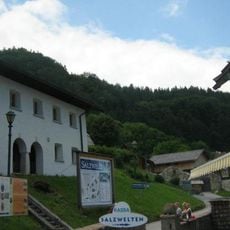
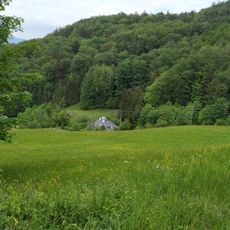
The church stands on the Dürrnberg plateau above Hallein, with the Fieberbründl fountain on the Zinkenberg slope just above it. The patronal feast of the Assumption is celebrated on 15 August, and the church is a protected monument.
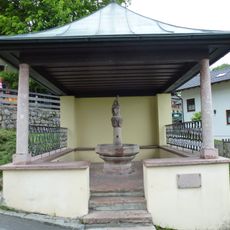
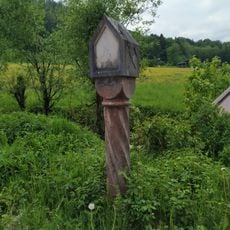
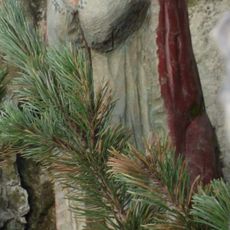
The Fieberbründl, a Gothic fountain of red-spotted marble with a polychrome wooden Madonna of the 18th century, stands on the Zinkenberg above the church, not beside it. Its name links it to fever: pilgrims came seeking healing, and votive gifts left at the church included crutches and wax lungs.
The community of curious travelers
AroundUs brings together thousands of curated places, local tips, and hidden gems, enriched daily by 94,015 contributors worldwide.