Befestigung Pass Lueg, Mountain fortification in Golling an der Salzach, Austria
The Pass Lueg fortification sits 552 meters above sea level at the narrowest point of the Salzach River valley between the Hagen and Tennen mountains. It occupies a strategic location where the river cuts through a tight passage and where transportation routes converge.
The fortification began in the 12th century as a toll station, first mentioned in 1160, to fund bridge construction along the Salzach gorge. In 1809 it became part of local resistance against French and Bavarian troops.
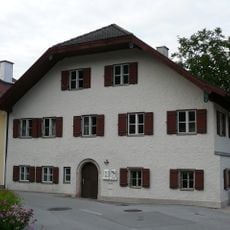
The pass is still known for the marble plaque in the Golling museum, which records the building work carried out under Archbishop Johann Jakob Khuen von Belasi between 1560 and 1575. The site also keeps the memory of Josef Struber, who commanded the Salzburg riflemen here against Bavarian and French troops in 1800, 1805 and 1809.
The site is best reached via the federal road B159, which passes through the narrow section via a 150-meter tunnel. The modern A10 motorway bypasses the tight valley with mountain tunnels and provides an alternative route for through traffic.
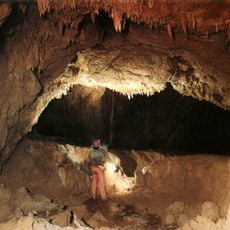
The Cold War brought the heaviest armament: from 1956 to 1959 the army built a fixed position (FAN LU1) around the older blockhouse, with two Soviet 76-mm M1942 divisional guns aimed at the pass summit, MG-42 machine guns guarding the entrances and camouflaged anti-aircraft mounts against low-flying helicopters. The bunker held 40 bunk beds, showers, a sick bay and a mine telephone, and stored 70 to 100 rounds for the guns. Across the Salzach, the Kroatenhöhle cave was enlarged from 1962 into a bunker (FAN LU2) for up to 40 men with its own generators and drinking-water springs.
The community of curious travelers
AroundUs brings together thousands of curated places, local tips, and hidden gems, enriched daily by 93,355 contributors worldwide.