Gaul, historical region in France
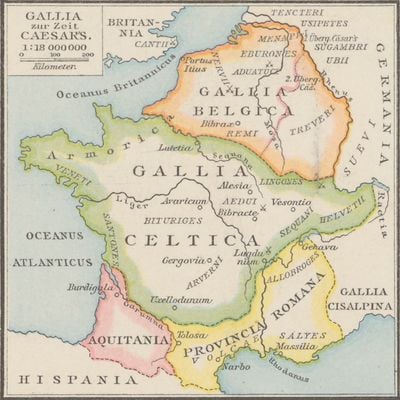
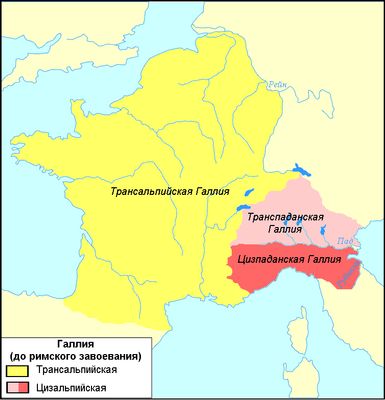
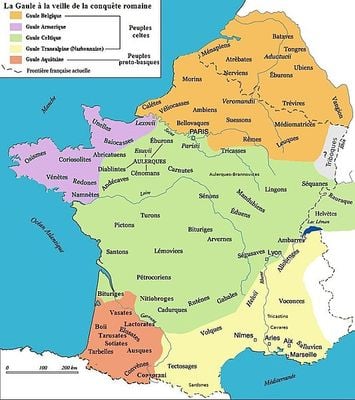
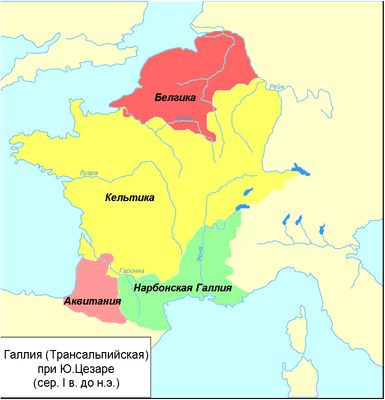
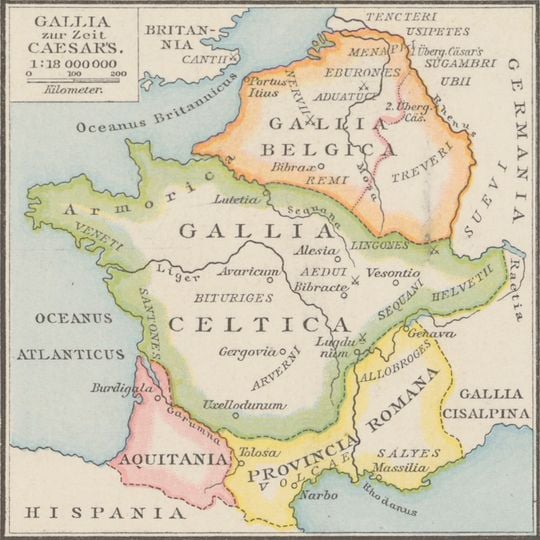
Gallien was a large ancient territory surrounded by rivers and mountains, inhabited by various peoples and characterized by hills, forests, and plains. The region encompassed areas of present-day France, Luxembourg, Belgium, and parts of Switzerland, Italy, the Netherlands, and Germany.
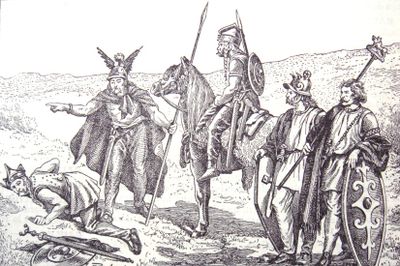
Gallien was conquered by Julius Caesar during the Gallic Wars more than 2000 years ago, remaining under Roman rule for nearly 500 years before barbarian and Frankish tribes invaded and laid the foundation for medieval France.
The Gallic people expressed their identity through temples, religious ceremonies, and priests called druids who served as judges and teachers. Their artistic traditions developed from simple geometric patterns to detailed sculptures depicting warriors and deities, visible today in archaeological collections.
Museums and archaeological sites throughout France display artifacts and information about Gallic civilization, with major collections in regional museums and excavation sites like Alésia where visitors can explore the history directly at its source.
The druids maintained an oral culture of stories and legends, as the Gauls wrote little, and their knowledge was so valued that young nobility spent years memorizing their teachings. This reliance on spoken transmission shaped how history and beliefs were preserved and passed down.
The community of curious travelers
AroundUs brings together thousands of curated places, local tips, and hidden gems, enriched daily by 90,889 contributors worldwide.