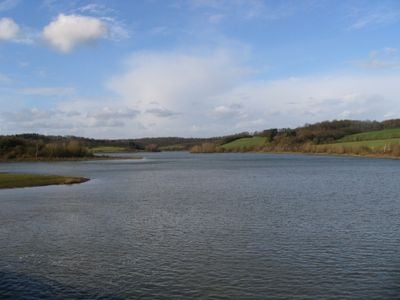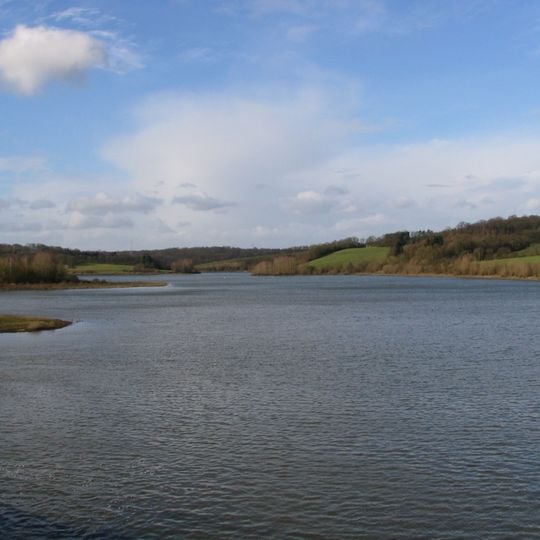
Eau d'Heure lakes, Artificial lake complex in Wallonia, Belgium.
Eau d'Heure is a system of five linked reservoirs in the Walloon region covering roughly 6 square kilometers across forested hills. The water basins reach up to 43 meters (141 feet) deep and are enclosed by dams that form walking paths and viewpoints along the shorelines.
In the 1970s, Belgium built five dams and a pumped storage plant to generate power and secure drinking water. The project turned several river valleys into the country's largest human-made lake complex, linking hydroelectric production with outdoor recreation.
The lakes take their name from the Eau d'Heure river, which feeds the reservoir near Silenrieux. The Plate Taille lake, fed by no natural stream, is filled by pumping water from the Eau d'Heure reservoir at night, when electricity is cheaper. The site was named a European Destination of Excellence in 2010 for non-traditional tourism.
The Plate-Taille dam, Belgium's largest, has a 790 m crest and can be visited on guided tours; the pumped-storage plant inside is also open to visitors. About 100 km of trails follow roughly 70 km of shoreline, linking the five lakes on foot or by bike. The Plate-Taille lake is reserved for sailing, windsurfing and scuba diving.
The reservoir uses reversible turbines that move water between basins, handling up to 400 cubic meters (14,000 cubic feet) per second. This pumped storage technology allows the plant to store energy and quickly balance peak demand in Belgium's electricity grid.
The community of curious travelers
AroundUs brings together thousands of curated places, local tips, and hidden gems, enriched daily by 93,471 contributors worldwide.