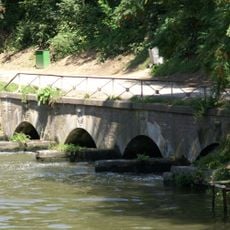
Zuid-Willemsvaart, Canal system between Den Bosch and Maastricht, Netherlands and Belgium
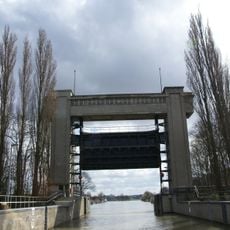
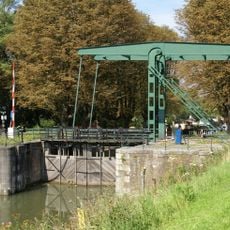
The Zuid-Willemsvaart is a canal running about 122 km through Dutch Limburg, Belgian Limburg and North Brabant, linking Maastricht with 's-Hertogenbosch. It was dug 10 m wide at water level and 2.1 m deep, with 19 locks of 7 m passage width and at least 50 m length. Its total height difference is 39.25 m; the three old Helmond locks 7, 8 and 9 were replaced in 1993 by a single Sluis Helmond.
Plans for a canal from 's-Hertogenbosch to the Belgian border date from before 1818, when Inspector General A.F. Goudriaan designed the route. The first stone was laid at Lock 1 in 's-Hertogenbosch on 11 November 1822, the same day the canal was named after King William I. The lowest section opened on 31 May 1825 and the higher sections on 24 August 1826.
The canal is named after King William I, and "South" distinguishes it from the Willemskanaal near Zwolle and the Noord-Willemskanaal in Groningen. The name was given on 11 November 1822, when the first stone of the locks and bridges was laid at Lock 1 in 's-Hertogenbosch by the governor of Limburg.
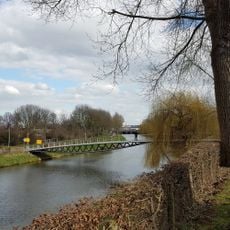
The canal is accessible year-round with numerous viewpoints and parking areas along the banks available from nearby roads. Walking and cycling paths run continuously alongside the water, making it easy to explore on foot or by bike.
The canal was dug by hand by several hundred labourers, many from outside the region, and cost 4.45 million guilders, roughly 45 million euros today. The original waterway was only 10 metres wide at the surface; the Belgian stretch was widened to about 25 metres in the 1840s, and much of the canal now measures 30 to 40 metres across.
The community of curious travelers
AroundUs brings together thousands of curated places, local tips, and hidden gems, enriched daily by 93,993 contributors worldwide.