Abdij van Hocht, Cistercian monastery in Lanaken, Belgium.
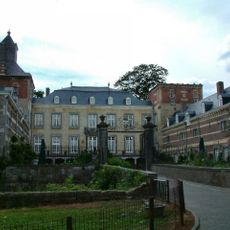
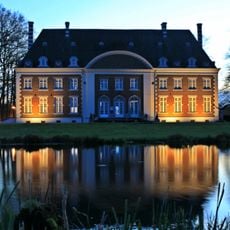
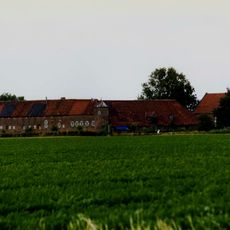
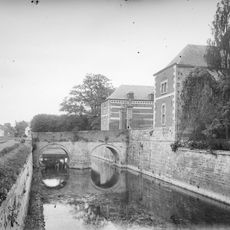
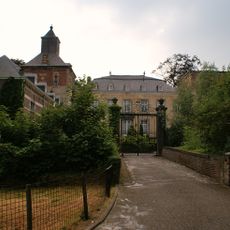
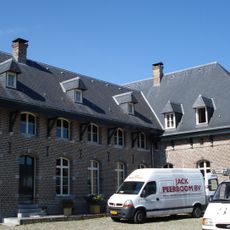
Abdij van Hocht is a Cistercian monastery in Lanaken featuring Renaissance-style buildings that blend religious and regional architectural traditions. The complex contains stone walls, courtyards, and different functional areas typical of large monastic settlements.
Theodorus van Pietersheim founded the abbey around 1180 and asked Eberbach Abbey, a daughter house of Clairvaux, to send monks, granting them fishing and toll rights on the Maas. In 1216 the monks left to found Val-Dieu, and Cistercian nuns from St. Salvator in Aachen took over in 1217. The community later became a chapter of secular canonesses; from Abbess Aleyde de Mérode (1574–1577) candidates had to prove eight noble quarters. After the French Revolution the goods were secularised and passed to private families.
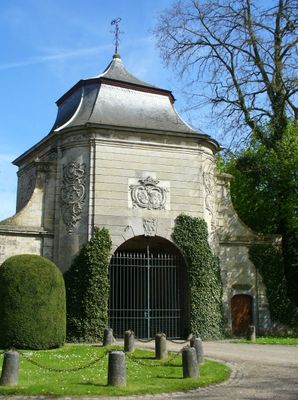
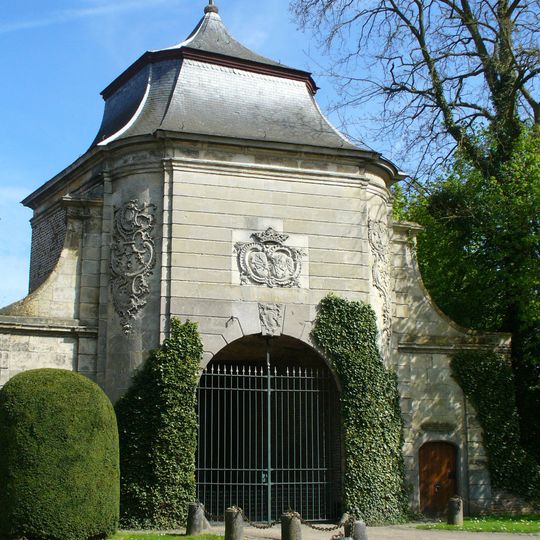
The name Hocht was the former name of the county of Loon, where the abbey was founded. The community began as Cistercian monks, but from 1217 Cistercian nuns from St. Salvator in Aachen took over, and the house later became a chapter of secular canonesses. From Abbess Aleyde de Mérode (1574–1577) candidates had to prove eight noble quarters. The south gate is called Vondelingenpoort because children were once left there.
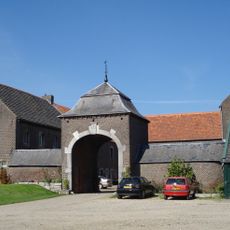
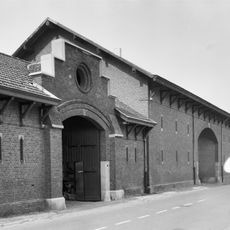
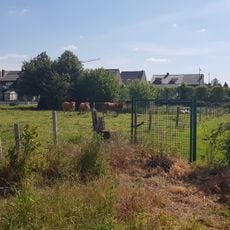
The castle, farmyard and grounds are private property and not open to the public; the buildings and the 1 km encircling wall are protected as monuments. The gatehouse, built by abbess Thérèse de Leefdael, can be seen from the public road, as can the two side entrances, the Maastrichterpoort and the Neerharenpoort, with their 19th-century iron gates.
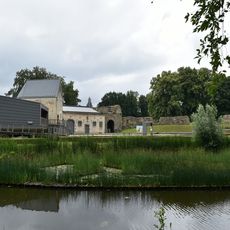
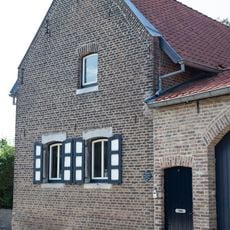
The watermill building, in brick with marlstone bands, dates from 1603 and is thought to stand on the site of older abbey buildings. In 1908 it was converted into stables with an adjoining coach house; part of it collapsed during restoration at the end of the 20th century.
The community of curious travelers
AroundUs brings together thousands of curated places, local tips, and hidden gems, enriched daily by 95,425 contributors worldwide.