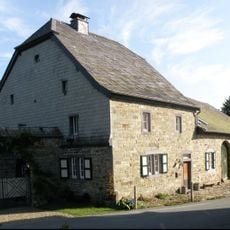
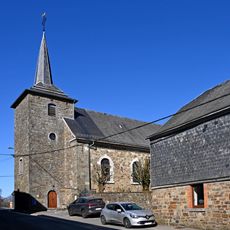
Wallonie malmédienne, Historical canton in eastern Belgium
The Wallonie malmédienne covers the two Belgian municipalities of Malmedy and Waimes, the only communes of the East Cantons where French and Walloon are traditionally spoken. Officially the term canton refers to the electoral canton of Malmedy and to the larger judicial canton of Malmedy-Spa-Stavelot, created in 2000; colloquially it means only the Malmedy and Waimes area, part of the Verviers district in Liège province, Wallonia.
After the Congress of Vienna in 1815, this territory was placed under Prussian rule and remained so for about a century. The Treaty of Versailles in 1919 then transferred it to Belgium, laying the foundation for its current place within the Walloon Region.
The area is called Wallonie malmédienne or Wallonie prussienne, names that tie its Walloon-speaking, Catholic identity to the Prussian period. In the 19th century, Germanisation attempts, notably during Bismarck's Kulturkampf, met resistance from priests such as Joseph Bastin and Nicolas Pietkin, the curé of Sourbrodt, who preached in Walloon to circumvent the ban on French.
French is the official language for all administrative matters in this canton, so visitors dealing with local offices should expect services in French. Malmedy is the main town in the area and offers a useful base for exploring both municipalities.
The name "Wallonie malmédienne" is not an official title: the two municipalities form the canton of Malmedy, and the same area is also called "Wallonie prussienne" because it was the only part of the Eastern Cantons where French and Walloon were traditionally spoken. In 1815 it was the Prussian district of Malmedy, and from 1920 it belonged to Belgium.
The community of curious travelers
AroundUs brings together thousands of curated places, local tips, and hidden gems, enriched daily by 93,463 contributors worldwide.