Roosenberg Abbey, Franciscan abbey in Waasmunster, Belgium
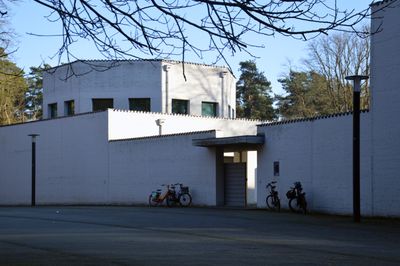
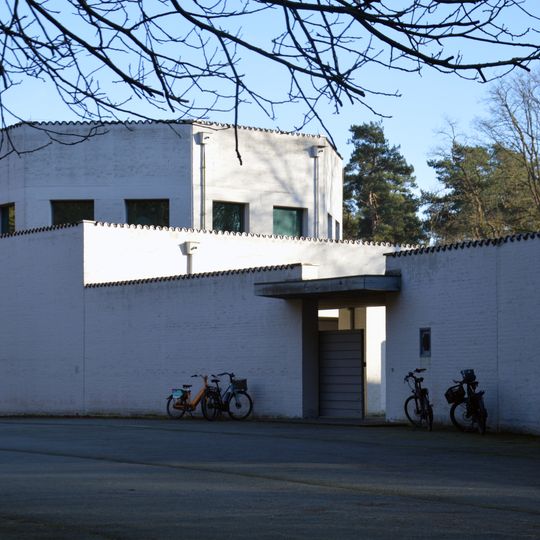
Roosenberg Abbey is a Victorine community that moved in 1975 to a functional building by Benedictine architect Hans van der Laan on the Oudeheerweg-Heide in Waasmunster. The white brick complex has a low-pitched roof and a long white forecourt wall topped with small triangular coping stones. A flat-roofed gateway with a tall grey door pierces the wall, and rectangular windows mark the set-back facade.
This monastery was founded in 1238 but moved to different locations multiple times because of damage and conflict. The current building dates to 1975, when it was completely redesigned and reconstructed by architect Dom Hans van der Laan.
The name Roosenberg, 'rose mountain', refers to the original site on the Rosenberg. The community began as Victorine canonesses following the Rule of Augustine, and since the 1970s merger with Franciscan sisters its spirituality has been Marian and Franciscan. The abbey welcomes individuals and groups seeking contemplative silence.
The abbey stands on a height at the western end of the Waasland Cuesta, along the Oudeheerweg-Heide road outside the town centre. It welcomes individuals and groups seeking contemplative silence, so arrange a visit in advance. The white brick complex, with its low-pitched roof and forecourt wall topped by triangular coping stones, is reached through a tall grey door in the wall.
The 1975 complex was designed by Hans van der Laan, a Benedictine monk and architect. The abbey's own manuscripts and documents were saved from the French Revolution by Abbess Anna Maria de Crombrugge, and in 2023 the sisters' patrimony moved to a side aisle of Waasmunster's Our Lady church.
The community of curious travelers
AroundUs brings together thousands of curated places, local tips, and hidden gems, enriched daily by 93,661 contributors worldwide.