Oudsberg, Protected nature area in Meeuwen-Gruitrode, Belgium
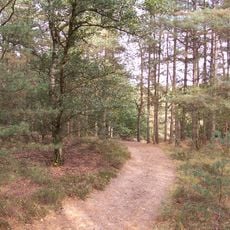
Oudsberg is the largest and highest open drifting sand dune in Flanders, rising about 30 metres above the Kempens Plateau within the Gruitroderbos. The sand is still on the move: the dune once reached 95 metres, among Limburg's highest points, but has lost at least 7 metres in recent decades as the tops blow away.
The Oudsberg took its present shape in two stages: sand drifts during the Weichselien, the last ice age ending about 11,000 years ago, then medieval overexploitation that left only heath, and sheep overgrazing that set the sand moving again. It has been a Flemish nature reserve since 1998, on Meeuwen-Gruitrode territory, and gave its name to the merged municipality of Oudsbergen.
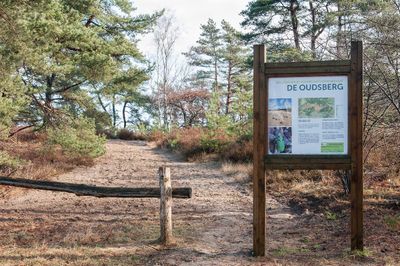
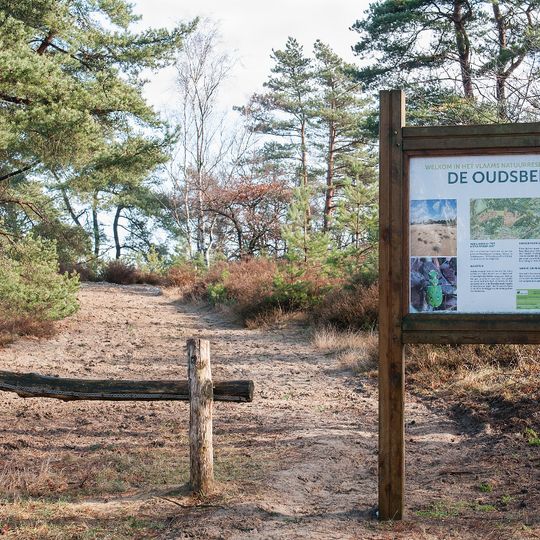
The dune gives its name to the merged municipality of Oudsbergen, created from Meeuwen-Gruitrode and Opglabbeek. The information panel at the site opens with "Welkom in het Vlaams Natuurreservaat De Oudsberg" and shows a map of the Duinengordel, the partnership of four Limburg municipalities that manages the open space around the dune.
The reserve lies in the Gruitroderbos, within the Duinengordel dune belt, and is part of the Hoge Kempen National Park. The sand is still shifting: the dune tops blow away while the sand spreads, and the hill has shrunk by at least 7 metres in recent decades. Stay on the marked paths so the bare sand and heath are not trampled further.
The Oudsberg once stood 95 metres high, among Limburg's highest peaks, but its summit has shrunk by at least 7 metres in recent decades as the sand blows away. The dunes are still shifting: bare sand spreads while the tops erode. The hill also gave its name to the merged municipality of Oudsbergen.
The community of curious travelers
AroundUs brings together thousands of curated places, local tips, and hidden gems, enriched daily by 93,533 contributors worldwide.