Coupure, Protected canal in Ghent, Belgium
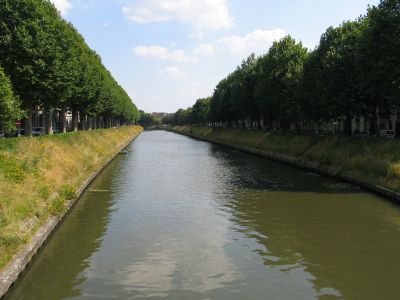
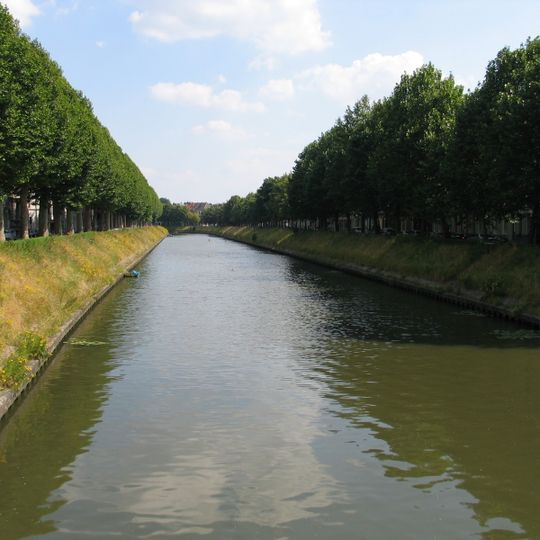
Coupure is a 1.6 km canal in Ghent linking the Leie to the Brugse Vaart, dug between 1751 and 1753. Its straight, still water is flanked by grassy banks with low retaining edges and rows of plane trees planted in 1785. The left bank, Coupure-Links, carries Ghent's busiest cycle route.
The Coupure was dug between 1751 and 1753 under a patent from Maria Theresa of Austria, granted through minister Antoniotto Botta Adorno, to link the Leie with the Bruges canal. The first ship passed in December 1753. In 1773 Maria Theresa had an octagonal provincial prison, the Rasphuis, built at the Rozemarijnbrug; it was demolished in 1937 for the State Agricultural College.
The canal area demonstrates the evolution of urban planning in Ghent, with plane trees lining the waterway and historical townhouses reflecting architectural developments.
The canal runs 1.6 km from the Leie to the Brugse Vaart. Coupure-Links, the left bank, is Ghent's busiest cycling route, with underpasses beneath the Rozemarijnbrug and Contributiebrug bridges. Since 2018 cyclists use the roadway as a fietsstraat while the path behind the trees is reserved for pedestrians.
The first ship through the Coupure was La Concordia from Nantes, carrying wine and chestnuts; it entered Ghent on 27 December 1753. The canal was dug between 1751 and 1753 under a patent from Maria Theresa, with a bend to skirt existing buildings near Ekkergem.
The community of curious travelers
AroundUs brings together thousands of curated places, local tips, and hidden gems, enriched daily by 93,521 contributors worldwide.