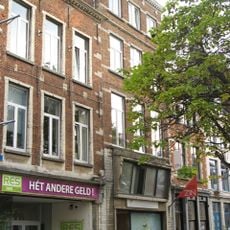
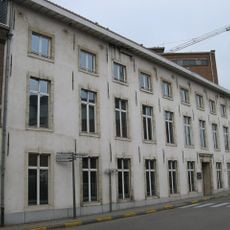
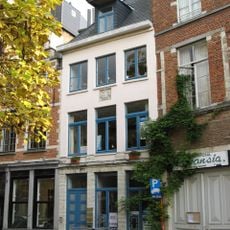
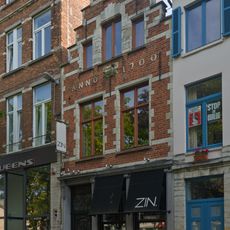
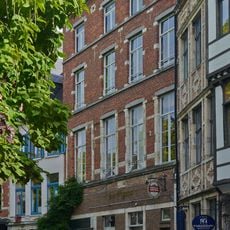
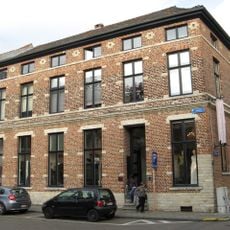
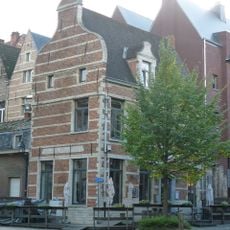
Klein Begijnhof, Medieval béguinage in Leuven, Belgium
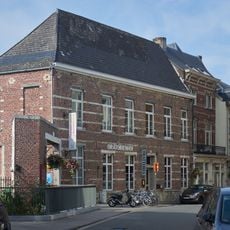
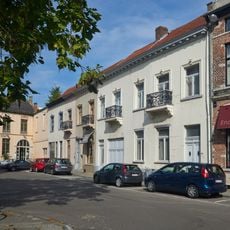
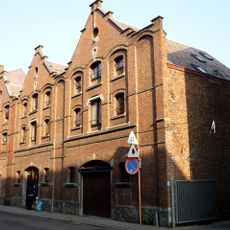
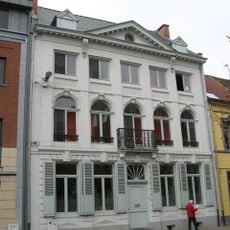
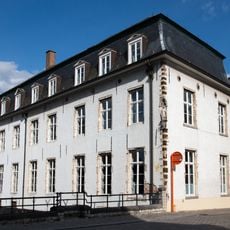
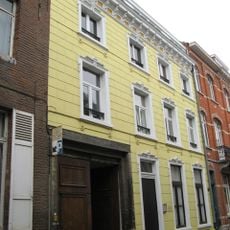
Klein Begijnhof is a beguinage in Leuven made up of one long street and a short dead-end alley, lined with white-painted brick houses from the 17th and 18th centuries. Many houses carry a name on the door, such as Sint Job (No. 25), whose portal bears the date 1718, and Convent Sint-Maarten (No. 4), with a sawtooth frieze under the cornice and a crow-stepped dormer.
Klein Begijnhof was founded in the second half of the 13th century and gained independence in 1631. It reached its peak during the 17th century when both its architecture and community were at their strongest.
Several houses still carry their original names on the door, such as Portieressenwoning (No. 1), Heilige Familie (No. 2), Sint Barbara (No. 3), Nazareth (No. 6) and Sint Job (No. 25). The beguines were widows or unmarried women who took no monastic vows but lived a shared religious life here until the last one died in 1855.
The beguinage is reached from the Mechelsestraat to the west and lies just north of the Sint-Geertruikerk; the Sluisstraat passage opened after houses at the north end were demolished with the church in 1862. About half of the houses were sold to private owners in 2005, the rest belong to the OCMW and are rented out, so visitors view the facades from the street.
The Saint Job house at number 25, in the short side street, has a doorframe with jamb stones carved with the date "Anno 1718". Above its flattened arch sits a projecting hood mould and an oval oculus, both with a continuous keystone.
The community of curious travelers
AroundUs brings together thousands of curated places, local tips, and hidden gems, enriched daily by 94,611 contributors worldwide.