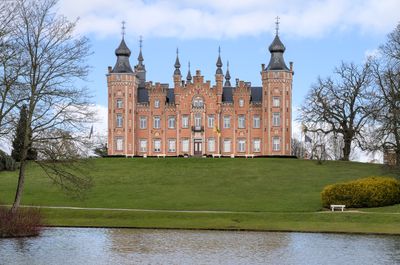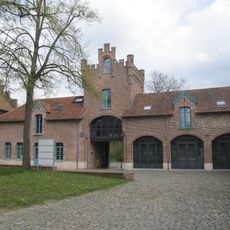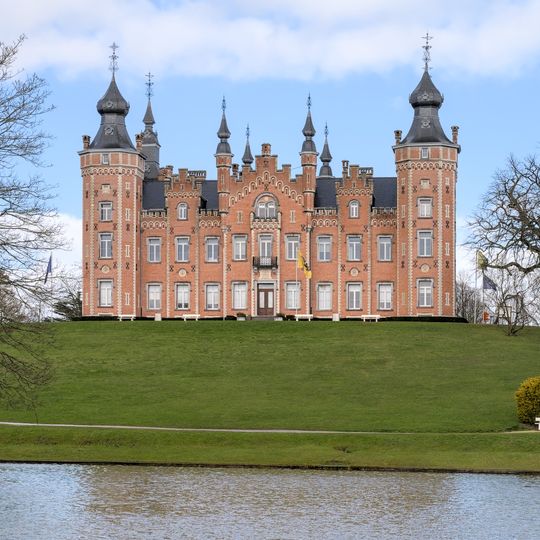
Kasteel de Viron, Neo-Tudor castle in Dilbeek, Belgium.
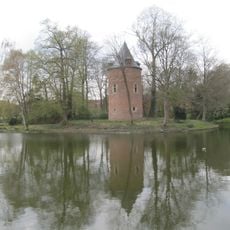
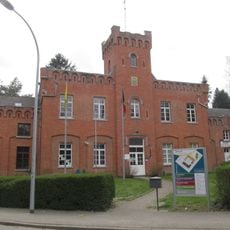
Kasteel de Viron is a stately home built in the Neo-Gothic style in Dilbeek, featuring nine symmetrical bays and two stories topped with a gable roof. The structure combines Renaissance-style arches with Gothic-inspired details, and it now functions as the town hall while its surrounding park remains open to the public.
The de Viron family acquired the estate with its water castle in 1787, and architect Jean-Pierre Cluysenaar designed the current building in 1862. The structure became the municipal headquarters in 1923 and has served as Dilbeek's administrative center ever since.
The castle displays design features rooted in 19th-century architectural traditions, and visitors can observe how historical and contemporary elements coexist in the building today. Its current role as a town hall blends its origins as a private home with its present function serving the community.
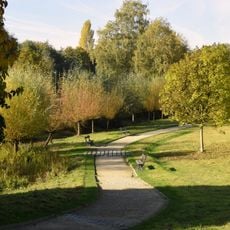
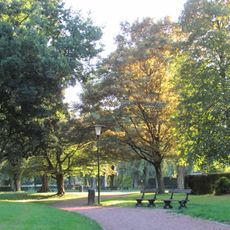
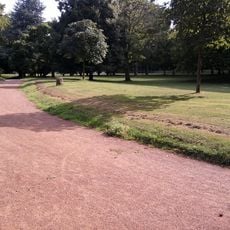
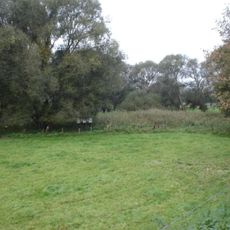
The building houses administrative offices and municipal services that visitors can see from the surrounding areas, with the park accessible for walking and enjoying the grounds. The landscape around the structure offers comfortable access and clear pathways for exploring the estate.
The structure incorporates calendar symbolism through precisely 365 windows, 52 doors, 12 towers, and 7 staircases, each representing elements of the year. This deliberate design choice adds a hidden symbolic layer to the building that most visitors overlook.
The community of curious travelers
AroundUs brings together thousands of curated places, local tips, and hidden gems, enriched daily by 92,036 contributors worldwide.