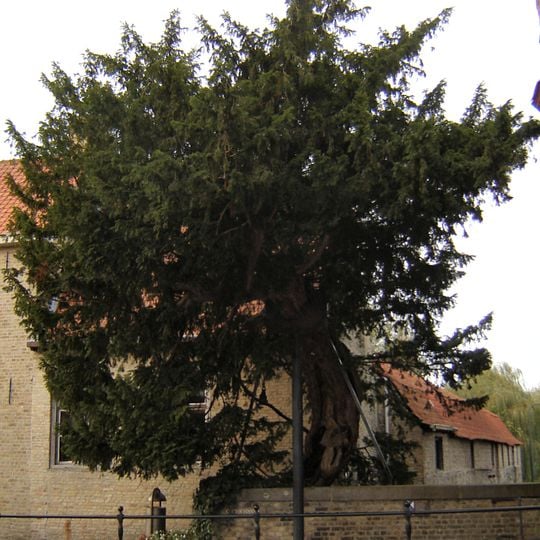
Caesarsboom, Yew tree in Lo, Lo-Reninge, Belgium
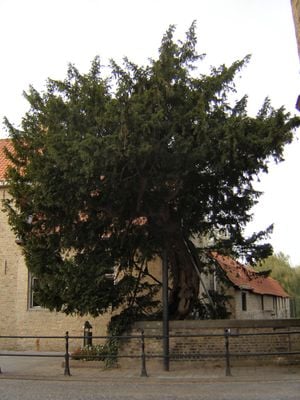
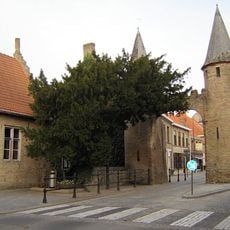
Caesarsboom is an ancient yew tree that stands next to a medieval gateway featuring gothic arches at the entrance to the small town of Lo-Reninge. The gate once served as a key entrance to the town center, and the tree grows directly beside it, creating a unified landmark.
The yew is about 250 years old, dated by its circumference; its predecessor appears fully grown in a late 18th-century painting. The legend of Julius Caesar resting here was first recorded by historian Jean-Baptiste Gramaye in 1612. The adjacent Westpoort is the last of four medieval town gates built in the 14th century and restored in 1852 and 1991.
The name comes from a legend first recorded by historian Jean-Baptiste Gramaye in 1612, who placed Julius Caesar in Lo in 55 BC, tying his horse to the yew and napping in its shade. The story gave the tree its name and its claim to Roman antiquity, though its circumference points to roughly 250 years. A late 18th-century painting shows its predecessor in full leaf.
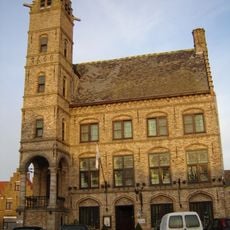
The tree is located directly beside Het Damberd house, a structure with historical importance to the town. When visiting, pay attention to the adjacent medieval gate structure that surrounds the tree, which helps you understand the old entrance to the city.
The tree grows beside the last remaining gate of the medieval town, with no other fortifications visible around the rest of the city. This sole remnant makes the tree an important reference point for imagining what the original town layout looked like.
The community of curious travelers
AroundUs brings together thousands of curated places, local tips, and hidden gems, enriched daily by 94,522 contributors worldwide.