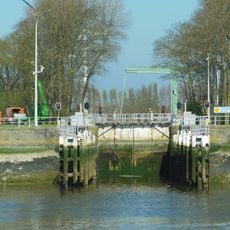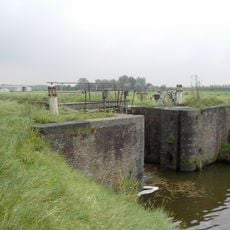
Ganzepoot, Lock complex in Nieuwpoort, Belgium
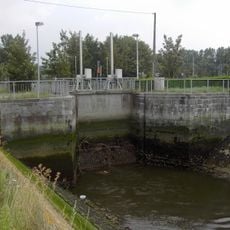
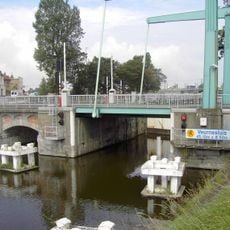
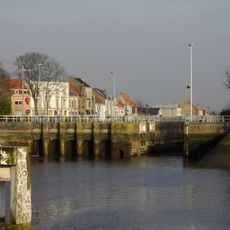
The Ganzepoot is a lock complex in the inner harbor of Nieuwpoort, on the Belgian North Sea coast, where six waterways meet at a single point. Each waterway has its own set of sluice gates that control the water level between the inland canals and the sea.
The complex was built in the 19th century to improve water management in the surrounding polders and support navigation. During World War I, Belgian forces used it to trigger controlled flooding that stopped the German advance in this part of the front.
The name Ganzepoot means "goose foot", after the fan shape the six waterways make when seen from above. The complex mixes drainage sluices with sliding gates and navigation locks with mitre gates. The Gravensas lock, begun in 1844 and opened in 1845, is named after the Count of Flanders, who laid a commemorative stone there with the Duke of Brabant in September 1844.
The complex can be reached on foot along the public paths that run beside the harbor and the waterways. Walking along the raised embankments gives the clearest view of how the different waterways come together at the center.
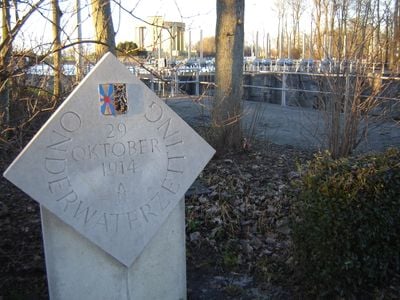
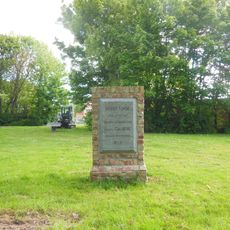
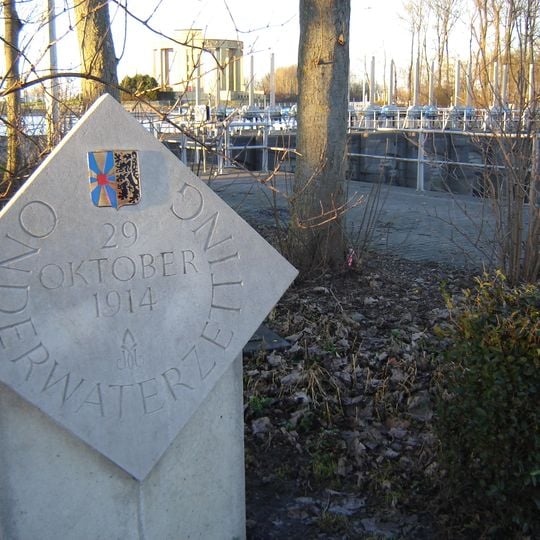
The memorial stone at the site records "29 Oktober 1914", the date when the polder between the IJzer and the Nieuwpoort-Diksmuide railway was flooded. The operation was carried out by opening the Veurne-Ambacht spillway's eight gate openings by hand, using cranks and gearboxes, at high tide. Today those gates are motorised.
The community of curious travelers
AroundUs brings together thousands of curated places, local tips, and hidden gems, enriched daily by 94,576 contributors worldwide.