Place Sainte-Catherine - Sint-Katelijneplein, Square in City of Brussels, Belgium
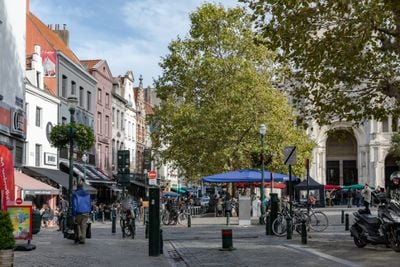
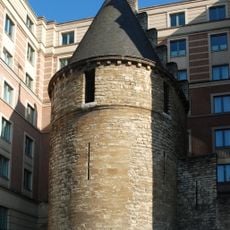
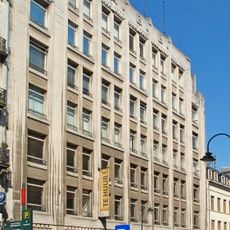
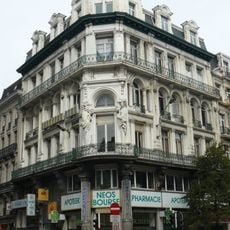
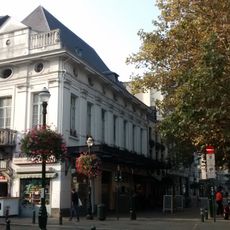
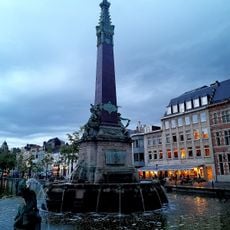
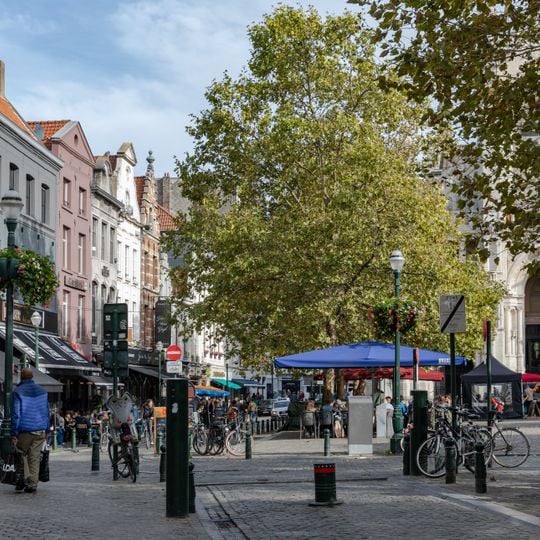
Place Sainte-Catherine is an elongated square in the center of Brussels, stretching on both sides of the Church of Saint Catherine and running perpendicular to Quai aux Briques and Quai au Bois à Brûler. It is bordered by a mix of old and newer buildings, with the small medieval Black Tower standing among them and cobblestone streets leading away from the open area.
The Sainte-Catherine basin was dug in 1564 as part of Brussels' inner port, after Mary of Burgundy authorised a canal to Willebroeck in 1477 and Charles V confirmed it in 1531. The basin was filled in 1853 as railways took over freight transport, and the square was laid out around 1870. The old chapel was demolished in 1893, and the present church was built between 1854 and 1874.
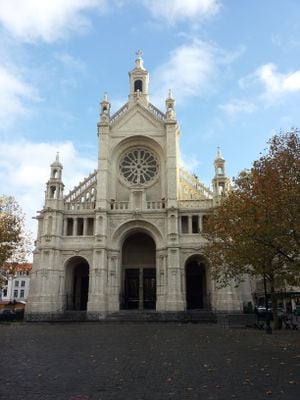
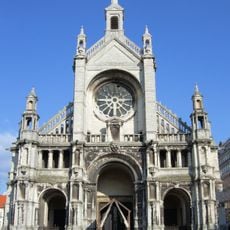
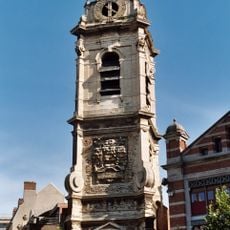
The square takes its name from Saint Catherine's Church, built by Joseph Poelaert between 1854 and 1874 on the filled-in Sainte-Catherine dock. The church mixes Gothic, Romanesque and Renaissance styles, a combination some critics call Poelaert's youthful mistake. The baroque tower of 1629, spared from the old church, now stands free.
The square is easy to reach by metro, with Sainte-Catherine station on lines 1 and 5 opening right onto the area. Wide sidewalks make strolling comfortable, and many cafes and restaurants with outdoor seating offer a chance to pause and watch the daily rhythm of the neighborhood.
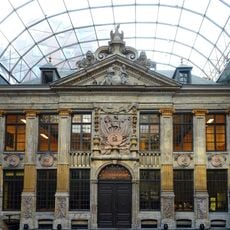
The Black Tower, partly hidden behind the Church of Saint Catherine, is a surviving fragment of the city's first wall from the 13th century, now surrounded by much newer buildings. Its dark stones feel out of step with the square around it, making it an easy detail to miss unless you walk behind the church.
The community of curious travelers
AroundUs brings together thousands of curated places, local tips, and hidden gems, enriched daily by 94,454 contributors worldwide.