Thracian Tomb of Kazanlak, Archaeological tomb in Stara Zagora Province, Bulgaria
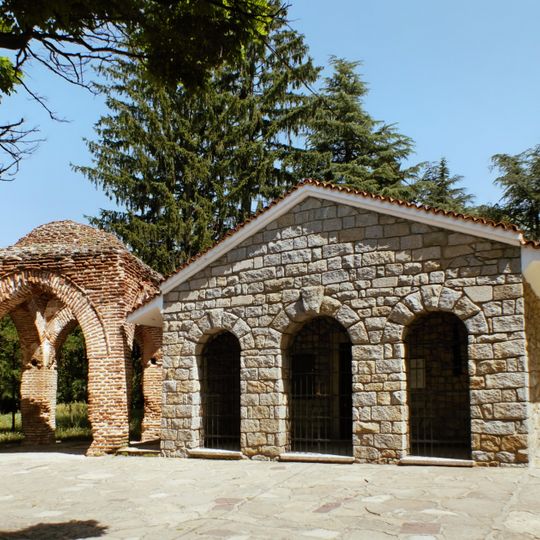
The Thracian Tomb of Kazanlak is a beehive tomb of brick with a narrow dromos leading to a round burial chamber. Its walls carry frescoes covering 40 m², painted by Kodzimasis Hrestos in black, red, yellow and white. The paintings show a Thracian couple at a funeral feast, chariots and horses. A protective structure now covers the tomb.
The tomb dates to the late 4th or early 3rd century BCE and belonged to the Thracian ruler Roigos. Soldiers digging a trench found it by accident on 19 April 1944 beneath a 7 m high mound with a 40 m base. It joined the UNESCO World Heritage list in 1979.
The murals show a seated couple gripping each other's wrists while attendants bring trays and musicians play horns; a chariot race fills the top of the dome. Art historian Lyudmila Zhivkova read the wrist gesture as tenderness and equality, an interpretation other specialists dispute. The seated woman appears on Bulgaria's 50 stotinki coin issued in 2005.
The original tomb stays locked; a full-size exact copy built nearby is what visitors enter, so the 40 m² of painting can be seen without exposing the originals to air. The copy reproduces the narrow corridor and the domed chamber with its painted friezes. The mound that covered the tomb measured 7 m high with a 40 m base diameter.
The portrait of a seated woman from the tomb's frescoes appears on the Bulgarian 50 stotinki coin, demonstrating the national importance of this site. This small detail links ancient art with modern Bulgarian identity in an unexpected way.
The community of curious travelers
AroundUs brings together thousands of curated places, local tips, and hidden gems, enriched daily by 93,667 contributors worldwide.