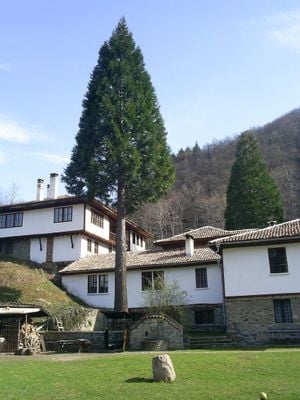
Seven Altars Monastery, Orthodox monastery in Osenovlag, Bulgaria
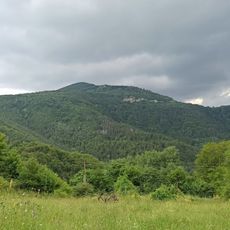
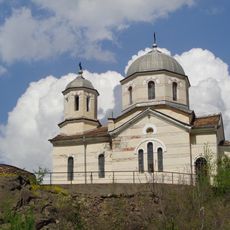
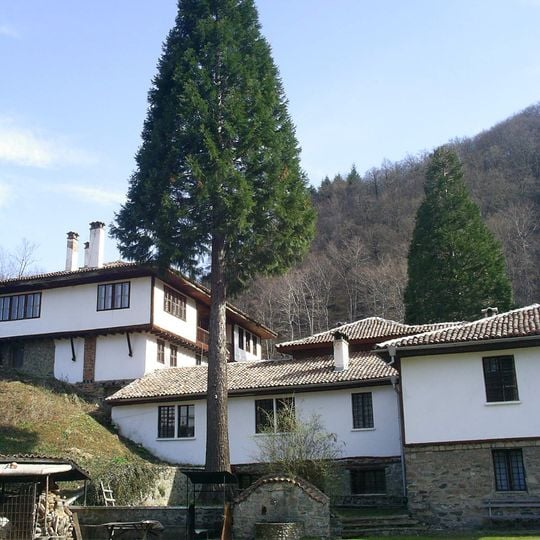
Seven Altars Monastery, officially the Osenovlag Monastery of the Nativity of the Mother of God, stands on a terrace above the Gabrovnitsa River at the foot of Izdremets Peak. Its old church, under a single roof, incorporates seven smaller chapels, the 'altars' that give the monastery its popular name. The complex also includes a bell tower, a three-storey residential building that once housed a monastic school, and a two-storey building with monks' cells and a refectory.
The monastery was founded in the 11th century, according to legend by Georgi, brother of the boyar Petar Delyan, who took the monastic name Gabriel and became its first abbot. The earliest written evidence of its existence is a gospel book from 1511 and a service book from 1554. It was destroyed by the Ottomans in 1737 and rebuilt from 1770 under the master builder Stoyan from Troyan; the church was restored from 1815 and the monastery from 1824.
The name "Seven Altars" comes from the seven chapels built under one roof in the Church of the Nativity of the Mother of God. A legend tells that seven boyars founded the nearby villages of Osenovlag, Ogoya, Ogradishte, Bukovets, Leskovdol, Zhelen and Lakatnik, and that the church was made with seven altars in their honour. Another tradition names the seven voivodes who rebuilt the monastery after its destruction, among them Vulchan and Pop Martin.
The monastery lies on a terrace on the right bank of the Gabrovnitsa, about 10 km south-southwest of Eliseyna station in the Iskar Gorge; a mountain road branches south from the II-16 highway and continues past the monastery to Osenovlag. Fifty beds in rooms of different sizes are available for pilgrims and visitors, and there is a parking area and a restaurant. The monastery gate stands in the northern row of residential and farm buildings.
In the churchyard behind the church lies the grave of the children's writer Zmey Goryanin (1905–1958). The monastery gate was taken from the ruins of the Latin Fortress, a Roman-era stronghold whose stone wall fragments survive on the slope north of the complex.
The community of curious travelers
AroundUs brings together thousands of curated places, local tips, and hidden gems, enriched daily by 93,500 contributors worldwide.