Roman stadium, Ancient Roman stadium in central Plovdiv, Bulgaria.
The Roman stadium in Plovdiv was a large arena with marble seating that held around 30,000 spectators. The structure extended 240 meters in length and was divided into multiple sections for viewing.
Emperor Hadrian ordered construction of this structure in the 2nd century as a center for athletic competition. The stadium was later integrated into the city walls and remains part of the urban landscape today.
Games held here were modelled on the Pythian Games of Greece and organised by the General Assembly of Thrace. For Caracalla's visit in 214 they were renamed Alexandrian, and for Elagabalus in 218 Kedrisian. A marble slab found at the sphendone shows games honouring Antinous, Hadrian's deified favourite.
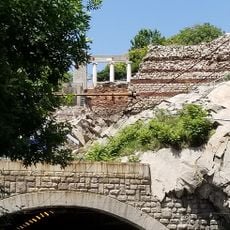
The northern curved section is visible at Stadium Square, while most of the structure lies beneath the main pedestrian street. You can freely visit the above-ground area and view the surviving foundations and walls.
The stadium features underground passages with syenite paving and drainage channels that reveal Roman engineering skill. These hidden structures helped direct water away and maintain the arena in proper condition.
The community of curious travelers
AroundUs brings together thousands of curated places, local tips, and hidden gems, enriched daily by 94,457 contributors worldwide.