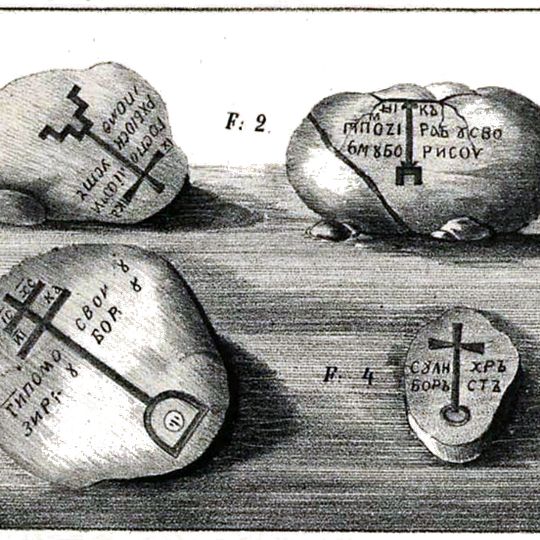
Boris stones, Sacred boulders in Western Dvina River, Belarus
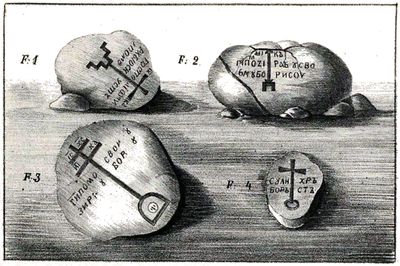
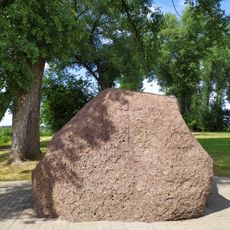
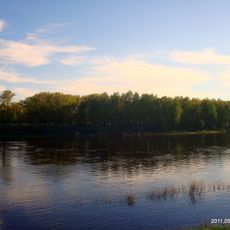
The Boris stones are seven medieval boulders, the largest 17 metres in circumference, set along the Western Dvina between Polotsk and Drissa. Each bears a large cross on a Golgotha base, flanked by the Greek letters IC XC NIKA, meaning Jesus Christ conquers. The inscriptions were cut into the glacial rock in the 12th century.
The stones were carved in the 12th century on the orders of Prince Rogvolod Vseslavich, who took the baptismal name Boris, giving the group its name. They are among the oldest surviving religious monuments in what is now Belarus.
Each stone bears a large cross flanked by the abbreviated Greek legend IC XC NIKA, "Jesus Christ conquers", and the cross stands on a stepped base representing Golgotha. The inscription asks the Lord to help "your servant Boris". The boulders were probably venerated by pagan locals long before the land was Christianised, so the carvings layered a Christian message onto older sacred stones.
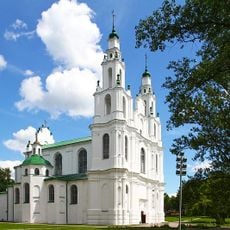
Today only three of the stones can be visited: one stands near St Sophia Cathedral in Polotsk, one is on display at the Museum of Boulders in Minsk, and one is kept at Kolomenskoye in Russia. Since they are spread across different locations, it is worth checking each site before planning your visit.
The largest stone has a circumference of roughly 17 meters (about 56 feet), making it one of the largest carved boulders in the region. Some fragments were only found again in 1988, after being submerged when Soviet-era dams raised the water level of the river.
The community of curious travelers
AroundUs brings together thousands of curated places, local tips, and hidden gems, enriched daily by 94,022 contributors worldwide.