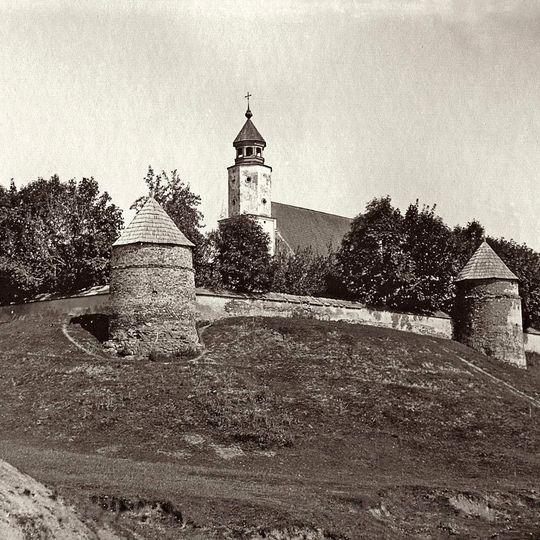
Kojdanaŭ Castle, Medieval fortress in Kojdanaŭ, Belarus.
Kojdanaŭ Castle was a stone castle on Haštoldava Hill in Kojdanaŭ, built at the end of the 15th or beginning of the 16th century. Its nine round towers measured 10 m in diameter with walls 1.5 m thick. The castle was surrounded by ramparts and a moat fed by the Niatieča River. Its appearance is unknown, and the buildings were dismantled in the 1930s for a district hospital.
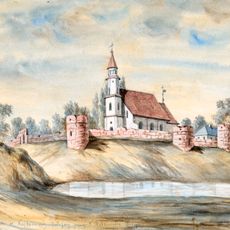
A wooden castle stood on the hill later called Haštoldava Hara in the 12th–13th centuries, ringed by ramparts and a moat fed by the Niatieča river. In the late 15th to early 16th century, while Kojdanaŭ belonged to the Haštold family, a stone castle replaced it, with nine round towers 10 m across and walls 1.5 m thick. It appears in a 1588 inventory but not in one of 1621; a fortified Calvinist church, probably built in 1613, then stood on the site.
The name Kojdanaŭ comes from the settlement where the castle stood, later renamed Dziaržynsk; the hill itself is still called Haštoldava hara after the Haštold family. The castle is recorded in a 1588 inventory but absent from the 1621 one, and by the early 17th century a fortified Calvinist church stood on the site. Nothing of the castle remains today.
Nothing of the castle or the Calvinist church survives: the buildings were dismantled in the 1930s for the district hospital. The site is the hill known as Gaštoldava hara, where the wooden fort stood from the 12th–13th centuries, ringed by ramparts and a moat fed by the Netecha. Look for the earthworks rather than walls.
The castle's appearance is unknown: no drawing or plan of it survives. It is recorded in a 1588 inventory but absent from the 1621 inventory, and its site on Haštoldava Hill later held a Calvinist church, probably built in 1613. The Radziwiłł estate that took over the county was also called "the castle".
The community of curious travelers
AroundUs brings together thousands of curated places, local tips, and hidden gems, enriched daily by 94,607 contributors worldwide.