Royal Ontario Museum, History and natural history museum in Toronto, Canada
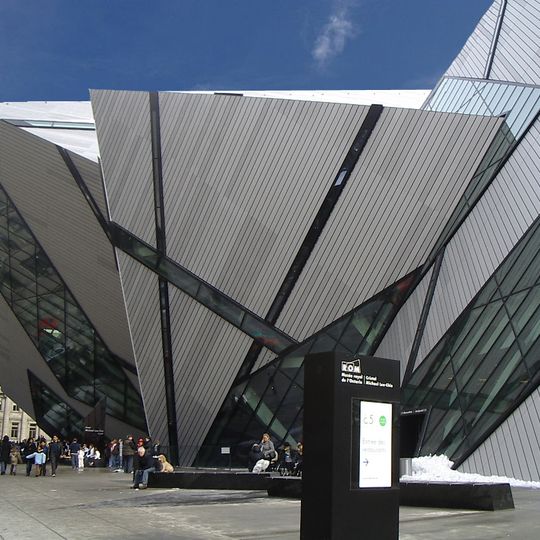
The Royal Ontario Museum is a natural and cultural history institution in Toronto that brings together collections of archaeology, ethnography, paleontology, and mineralogy across six floors. The exhibition spaces span several building sections, connecting historic rooms with modern extensions of glass and metal.
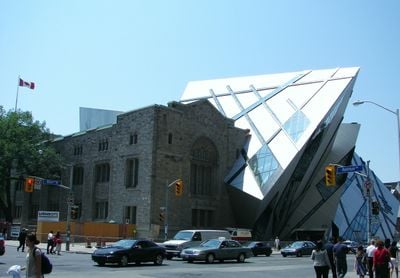
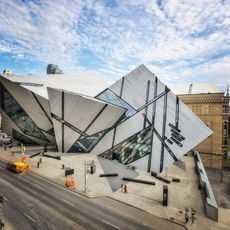
The institution first opened in March 1914 and was initially part of the University of Toronto until gaining full independence in 1968. The first expansion took place in the 1930s, while the largest construction phase concluded with the completion of the Crystal building in 2007.
The galleries display objects from every inhabited continent, including Egyptian mummies, Chinese ceramics, and Mediterranean textiles. Many visitors spend time in the Canadian history rooms, where First Nations everyday objects stand beside tools used by European settlers.
Most visitors plan around three hours for a tour, depending on interest in individual subject areas. Wheelchair-accessible entrances and elevators are available in all building sections, and coat lockers are provided in the entrance area.
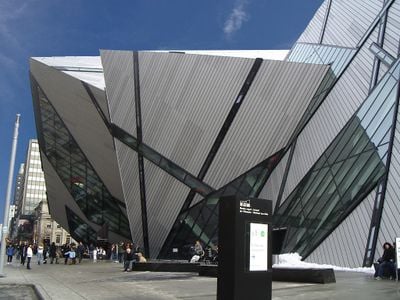
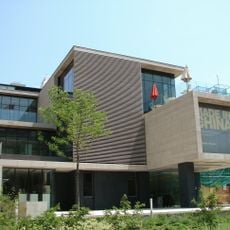
The Crystal building facade tilts in multiple directions, with some walls leaning outward and others inward. This design was originally controversial, but has since become a landmark in the neighborhood.
Location: Toronto
Inception: April 16, 1912
Official opening: March 14, 1914
Accessibility: Wheelchair accessible
Fee: Yes
Address: 100 Queen's ParkToronto, Ontario M5S 2C6
Opening Hours: Saturday-Thursday 10:00-17:30; Friday 10:00-18:30
Phone: +14165868000
Website: https://rom.on.ca
GPS coordinates: 43.66757,-79.39468
Latest update: December 11, 2025 23:57
Architecture does not have to follow straight lines and right angles. This collection presents buildings that stand out through their form: domes, spirals, tilted facades or organic structures that recall animals or plants. From Gaudí's mosaic covered works in Barcelona to the stacked concrete cubes...
Postmodern architecture emerged in the 1970s as a response to the rigid principles of modernism, reintroducing color, ornament, and historical references into contemporary building design. The movement evolved over decades, producing structures that challenge conventional forms and experiment with...
Old Varsity Stadium
135 m
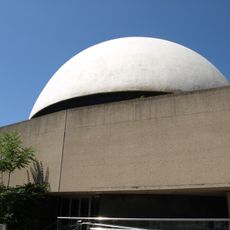
McLaughlin Planetarium
79 m
Gardiner Museum
138 m
Philosopher's Walk
76 m
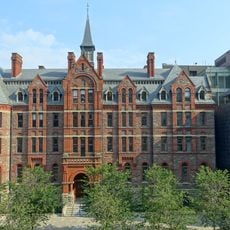
Annesley Hall
133 m
Lillian Massey Building
118 m
Institute for Contemporary Culture
17 m
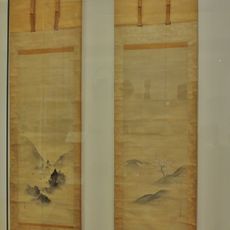
Spring and autumn landscapes (Hara Zaishō)
71 m
Ihnatowycz Hall
134 m
Campus Secrets and Spectres – University of Toronto Ghost Tour
34 m
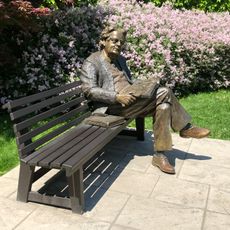
Bench, statue
221 m
Isabel Bader Theatre
182 m
Varsity Centre, University of Toronto
135 m
Victoria College Building
228 m
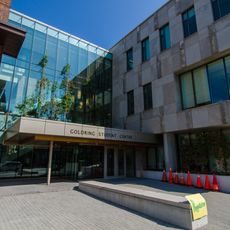
Goldring Student Centre
168 m
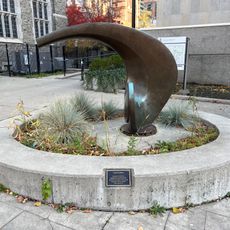
Anadyomene
217 m
Varsity Pavilion, University of Toronto
135 m
Jackman Law Building
194 m
Falconer Hall
114 m
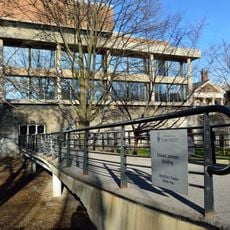
Edward Johnson Building
114 m
Flavelle House
194 m
MacMillan Theatre
95 m
Walter Hall
120 m
Koerner Hall
117 m
Mazzoleni Concert Hall
105 m
Untitled
108 m
Cracked Wheat
102 m
Ghost Bike
155 mVisited this place? Tap the stars to rate it and share your experience / photos with the community! Try now! You can cancel it anytime.
Discover hidden gems everywhere you go!
From secret cafés to breathtaking viewpoints, skip the crowded tourist spots and find places that match your style. Our app makes it easy with voice search, smart filtering, route optimization, and insider tips from travelers worldwide. Download now for the complete mobile experience.
A unique approach to discovering new places❞
— Le Figaro
All the places worth exploring❞
— France Info
A tailor-made excursion in just a few clicks❞
— 20 Minutes