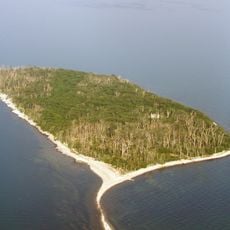
Point Pelee National Park, National park in Essex County, Ontario, Canada
Point Pelee stretches far into Lake Erie as a narrow peninsula that combines marsh, forest, sandy beaches, cedar savanna, and wetlands along its length. Vegetation shifts between dense woodland and open shoreline, while the shallow waters around it provide habitat for waterfowl and amphibians.
Indigenous people lived at Point Pelee for at least 6,000 years, with the largest archaeological site occupied around AD 700–900. In 1790 Deputy Indian Agent Alexander McKee negotiated a treaty ceding a large tract including Point Pelee to the Crown, but the Caldwell First Nation Chippewa, who inhabited the point, never signed it. Birdwatchers and hunters urged protection, and in 1918 it became Canada's first national park created for conservation.
French settlers named it for the bare tip of land jutting into the lake. Today visitors gather in spring and fall to watch migratory birds pass through, with thousands stopping to rest along the shoreline and through the woods.
Several walking trails lead through the different habitats and end at lookout points along the shore. During peak migration in spring and fall, an early morning visit works best when birds are more active.
Middle Island, a small island in Lake Erie, belongs to the park and sits farther south than any part of mainland Canada. It was added only in 2000, pushing the country's true southern limit even lower.
The community of curious travelers
AroundUs brings together thousands of curated places, local tips, and hidden gems, enriched daily by 94,229 contributors worldwide.