Cross of Gaspé, Monumental cross in Gaspé, Canada.
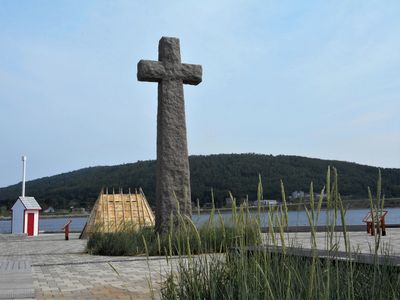
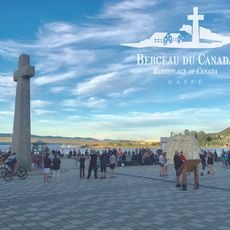
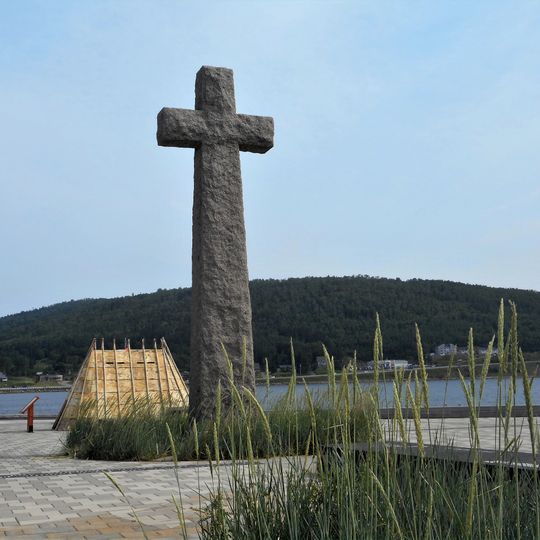
The Cross of Gaspé is a monolithic grey granite cross unveiled on 25 August 1934 at the water's edge near the Gaspé bridge, on the site called "Gaspé, Berceau du Canada". Its rough shaft tapers toward a squared head, with short blocky arms set near the top. It weighs more than 42 tons and stands on a paved surface with a low grassy planting at its base.
The Canadian government commissioned this monument in 1934 to mark the 400th anniversary of Jacques Cartier's arrival in 1534. It replaced the original wooden cross that had served as a symbol of French territorial claim.
The wooden cross planted on 24 July 1534 by Jacques Cartier's crew asserted ownership of the land for King Francis I of France. The present granite cross, unveiled on 25 August 1934, carries that claim into the present. A plaque added at its foot on 23 August 2009 honours the Rivière-à-Pierre quarrymen who cut the stone.
The cross stands at the water's edge near the Gaspé bridge, at the site called "Gaspé, Berceau du Canada". It has been moved three times: Queen Street until 1979, the grounds of the Cathedral of Christ-Roi until autumn 2012, and this waterfront spot since October 2012. A stele inaugurated on 23 August 2009 at its foot honours the Rivière-à-Pierre quarrymen and cutters.
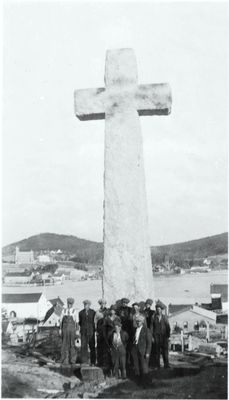
The 42-ton block was cut in 1934 from the Auguste Dumas quarry at Rivière-à-Pierre, carried by rail on two cars to Quebec City, then by coaster to the Gaspé dock. From there it was hauled on rollers by one of the first tractors used in Gaspé and raised with rails, pulleys and cables, pulled by many horses and a tractor. A plaque added in 2009 honours the quarrymen who cut it.
The community of curious travelers
AroundUs brings together thousands of curated places, local tips, and hidden gems, enriched daily by 92,811 contributors worldwide.