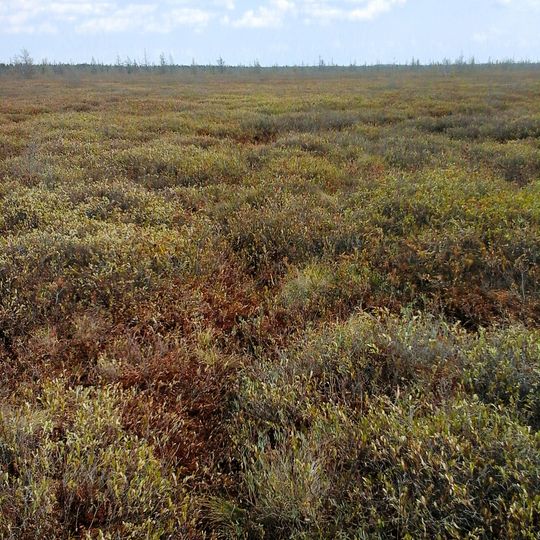
Alfred Bog, Protected wetland in Eastern Ontario, Canada.
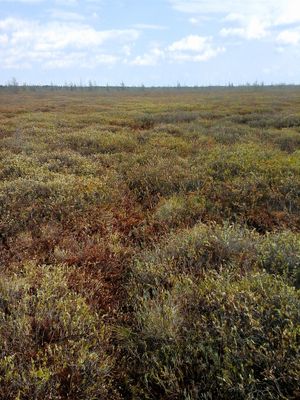
Alfred Bog is a large wetland in Eastern Ontario featuring sphagnum moss, black spruce forests, and diverse marsh zones throughout its expanse. The landscape forms a complex mosaic of interconnected wet habitats that shift and change as you move through the terrain.
This wetland formed after the Champlain Sea retreated, developing at the meeting point of ancient river channels. Protection began in the 1980s through local conservation efforts.
Local conservation groups initiated protection efforts in 1981, leading to the preservation of over 3,300 hectares through partnerships with environmental organizations.
The bog lies about 7 km south of Alfred and 70 km east of Ottawa; a 273-metre boardwalk is the way in. The terrain is a domed peat bog, generally 1 to 2 metres higher than the surrounding farmland, with peat averaging 4.5 metres deep. The park is non-operating, so there are no facilities or staff on site.
The bog's peat lies 1.2 to 7.1 metres deep, averaging 4.5 metres, and because peat was cut away the surface now stands 1 to 2 metres above the surrounding farmland. Its vegetation is boreal, normally found much farther north, including the regionally rare Canada jay, black-backed woodpecker and palm warbler.
The community of curious travelers
AroundUs brings together thousands of curated places, local tips, and hidden gems, enriched daily by 92,656 contributors worldwide.