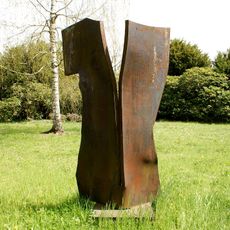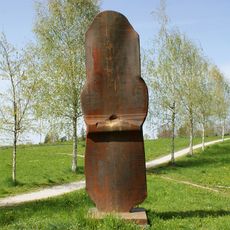
Zentrum Paul Klee, Art museum in Bern, Switzerland.
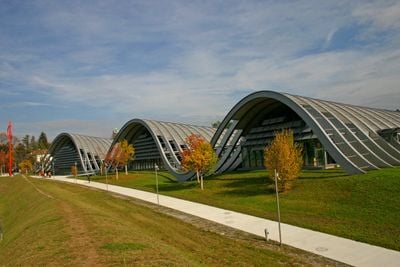
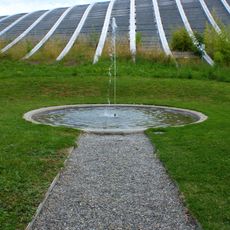
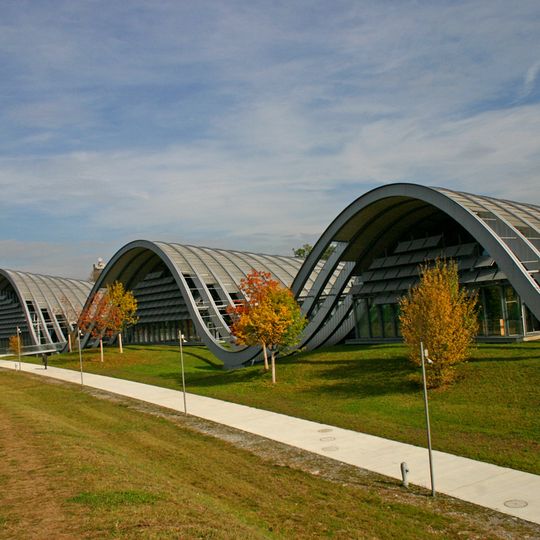
The Zentrum Paul Klee is an art museum in Bern whose main exhibition halls lie underground, because Klee's works are sensitive to light. Above them, Renzo Piano set three wave-shaped steel-and-glass hills that echo the wooded slopes behind. Building the complex required removing 180,000 cubic metres of earth and bringing in about 2,000 steel components and 10,000 cubic metres of concrete.
The idea came from the artist's grandson Alexander Klee. In 1997 Livia Klee-Meyer, widow of Klee's son, gave around 690 works to the city and canton of Bern, and donations from Maurice Edmond and Martha Müller made the project possible. The city chose the Schöngrün site in 1998 and Renzo Piano was appointed architect that year; the centre opened on 20 June 2005.
The centre's concept reflects two aspects of Klee's work: his ties to children's art and to music. A children's museum, Creaviva, runs activities for young visitors, and the museum has its own ensemble, the Klee Ensemble, alongside literary and musical events. Klee's puppets, made for his son, are among the personal objects in the collection.
The Zentrum Paul Klee stands at Schöngrün in Bern's eastern Schosshalde district, near Paul Klee's grave. Bus 12 toward Schosshalde serves the museum; drivers take the A6 Bern–Thun motorway and exit 12 (Bern-Ostring). Much of the building lies underground because Klee's works are light-sensitive, so allow time for the lower galleries as well as the wave-shaped roof landscape above.
The collection includes puppets Paul Klee made for his son, along with his plant and mineral specimens and manuscripts. These personal objects let visitors link the artworks to the story of his life.
The community of curious travelers
AroundUs brings together thousands of curated places, local tips, and hidden gems, enriched daily by 92,738 contributors worldwide.