Kunstmuseum Basel, Art museum in Basel, Switzerland
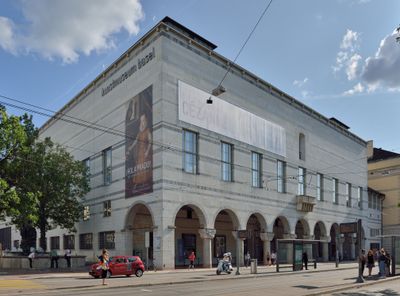
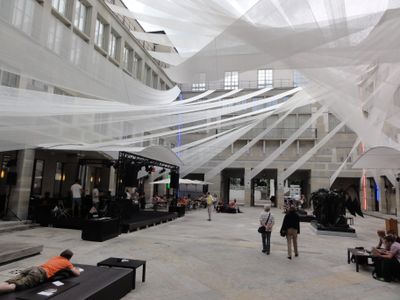
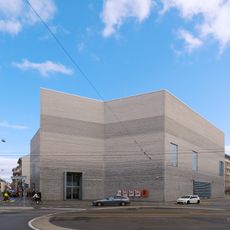
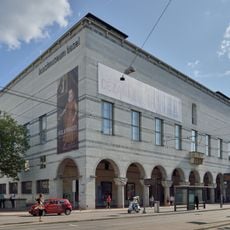
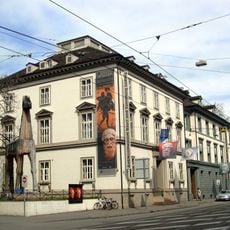
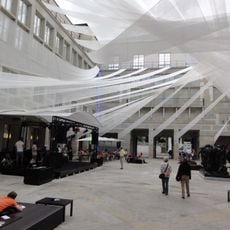
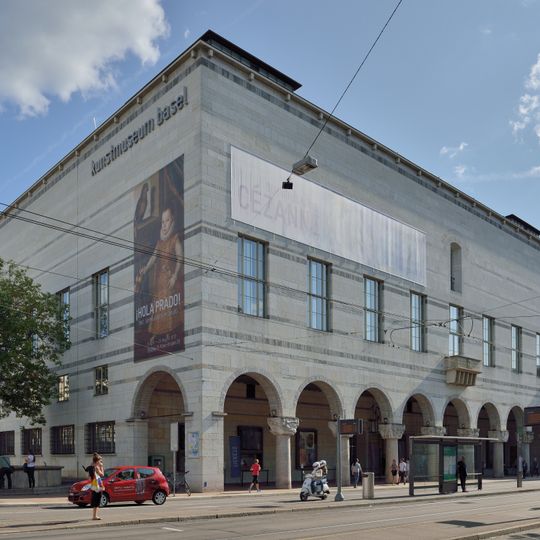
Kunstmuseum Basel comprises a main building of 1931-1936 by Paul Bonatz and Rudolf Christ, grey stone with horizontal banding, a corner facade lettered "Kunstmuseum Basel" and a ground-level arcade of arched openings. Across Dufourstrasse stands the 2016 extension by Christ & Gantenbein, an angled concrete-brick building enclosing a paved courtyard on three sides, where white fabric strips are stretched overhead and square stone pillars carry open arcades.
The museum was established in 1661 with the acquisition of the Amerbach Cabinet, a significant private art collection. This made it the world's first publicly accessible art museum owned by a municipality.
The museum's name comes from the Öffentliche Kunstsammlung Basel, the public collection the city bought from Basilius Amerbach's family in 1661. The Upper Rhine paintings and drawings date from 1400 to 1600, not the 14th and 15th centuries. In 1967 Baslers voted a state credit of six million francs and donated 2.4 million more to keep two Picassos; Picasso answered with four gifts, and Maja Sacher-Stehlin added Le poète (1912).
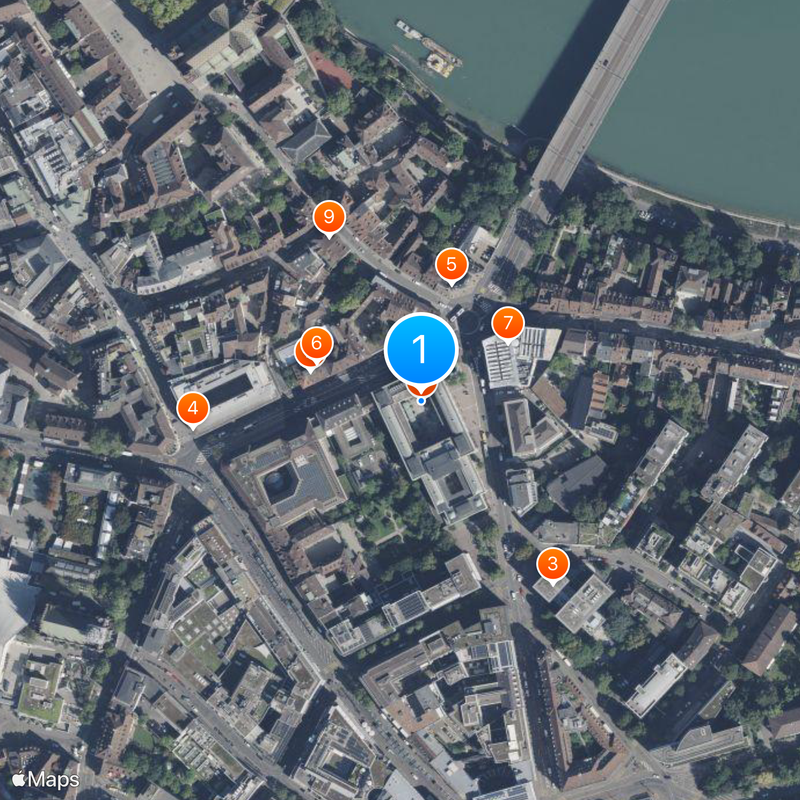
The museum is located near Basel Cathedral and easily walkable from the city center. Visitors should allow ample time for the extensive collections and can move between the separate buildings at their own pace.
The Kupferstichkabinett holds over 300,000 drawings, watercolours and prints, the largest publicly accessible collection of its kind in Switzerland. Among them are 50 drawings from five of Paul Cézanne's sketchbooks. In 1975 the Dia Art Foundation installed Dan Flavin's Untitled (In memory of Urs Graf) in the front courtyard and arcade gallery, its first major public work, gifted to the museum in 1980.
The community of curious travelers
AroundUs brings together thousands of curated places, local tips, and hidden gems, enriched daily by 92,711 contributors worldwide.