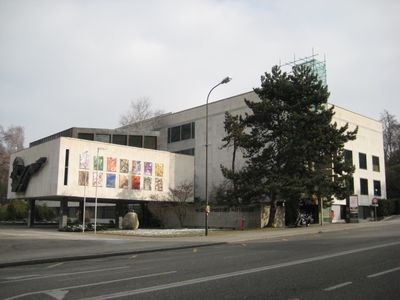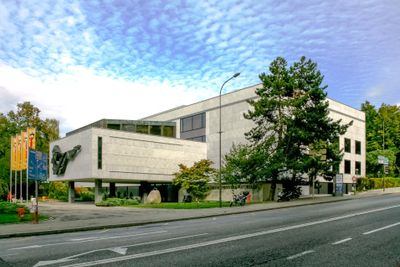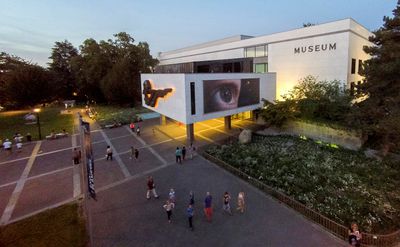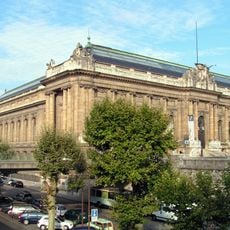
Natural History Museum of Geneva, Natural history museum in Geneva, Switzerland.
The Natural History Museum of Geneva houses one of Europe's largest natural science collections, with animal species, fossils, minerals, and rocks from around the globe. The collections enable researchers and visitors to explore the history of our planet and its biological diversity.
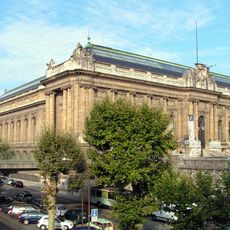
The institution began in 1794, when Geneva's Commission Nationale voted funds to buy Marc-Auguste Pictet's physics instruments and Pierre-François Tingry's natural history cabinet. The Musée académique was formally founded in 1818, moved to the Bastions building inaugurated on 10 October 1872, and later relocated to Malagnou Park. It has been closed to the public since 1 January 2024 for renovation and extension works.
The museum has published the Revue suisse de Zoologie since its founding in 1893, and the Revue de Paléobiologie since 1982. Its bat centre coordinates research and protection in western Switzerland and runs annual events for the European Bat Night. The two-headed tortoise Janus, displayed since 1997, serves as the museum's mascot.
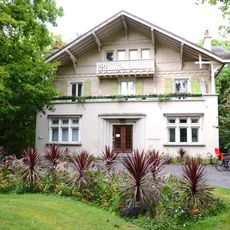
The museum has been closed to the public since 1 January 2024 for renovation and extension works, so the galleries in Malagnou Park cannot be visited at present. Permanent collections were free of charge before the closure, and the building is reached from the Malagnou park side, where the entrance wall bears the lettering "MUSEE D'HISTOIRE NATURELLE".
The museum's mascot is Janus, a two-headed tortoise kept on public display since 1997. Its library, created in 1832 on the proposal of François-Jules Pictet de la Rive, holds thousands of rare books and the archives of the ornithological society Nos Oiseaux.
The community of curious travelers
AroundUs brings together thousands of curated places, local tips, and hidden gems, enriched daily by 92,651 contributors worldwide.