St. Pierre Cathedral, 12th century cathedral in Genève-Cité, Switzerland
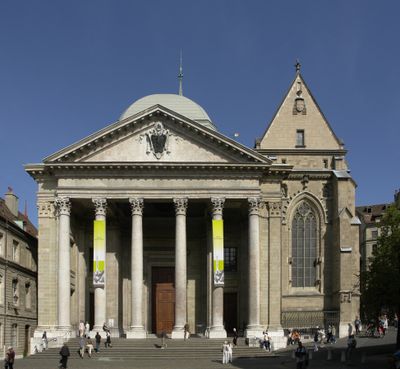
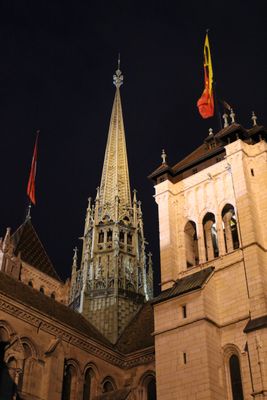
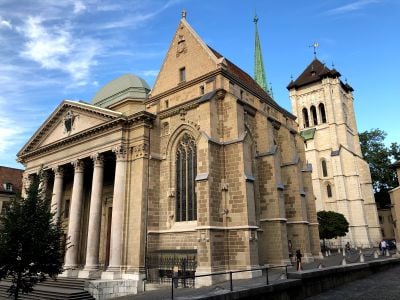
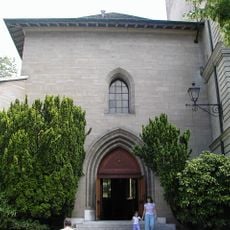
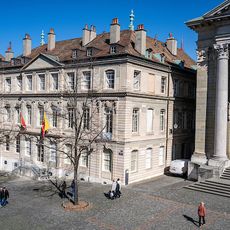
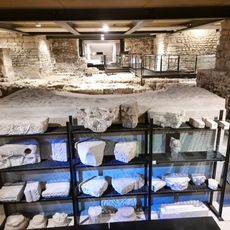
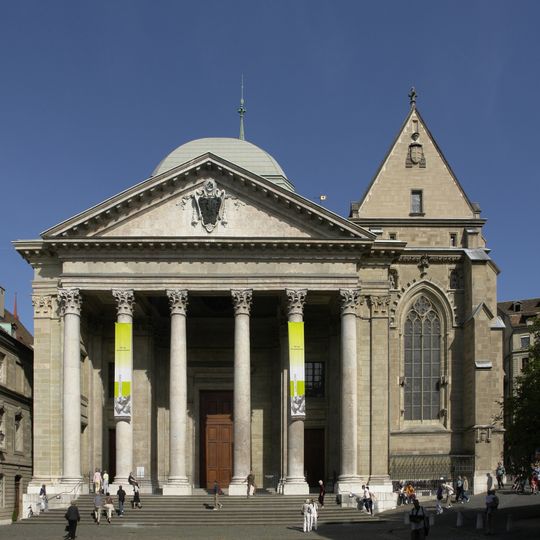
St. Pierre Cathedral is a 12th-century church in Genève-Cité that blends three distinct architectural styles, with its facade designed by Benedetto Alfieri in the 18th century using Neoclassical forms, while the interior displays Romanesque and Gothic features. Beneath the building lies an archaeological site spanning several thousand square meters that preserves multiple layered church structures from the 10th to 13th centuries.
The building began as an early Christian site in the 4th century and served as a Catholic cathedral until 1535. The Protestant Reformation under John Calvin transformed it into the heart of Reformed Geneva, marking a turning point in the city's religious history.
The cathedral's name honors Saint Peter, whose veneration has been connected to this site since ancient times. Visitors can observe how this place continues to hold central significance in the city's spiritual life, drawing people from different communities.
The visit includes both the church interior and the underground archaeological excavation, both open to exploration. Allow enough time to see both areas, and note that the stairs leading to the archaeological site may be steep and require careful footing.
Beneath the current structure lie remains of at least three distinct church buildings from different periods, layered one atop another, revealing how each generation of the city rebuilt its house of worship over the previous one. This stratigraphy tells a physical story of religious change without needing words.
The community of curious travelers
AroundUs brings together thousands of curated places, local tips, and hidden gems, enriched daily by 90,949 contributors worldwide.