Vindonissa, Celtic oppidum / Roman legionary camp / civilian settlement, Roman legionary camp and Celtic oppidum in Windisch, Switzerland
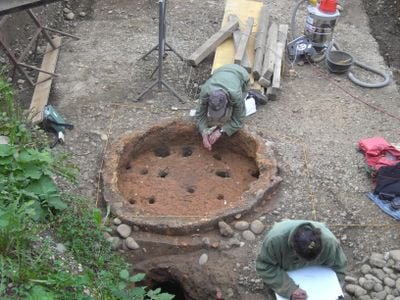
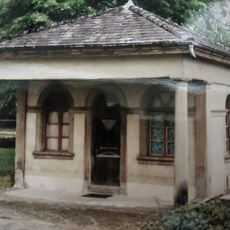
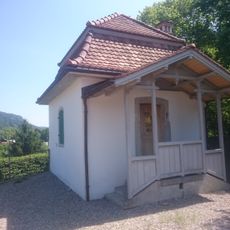
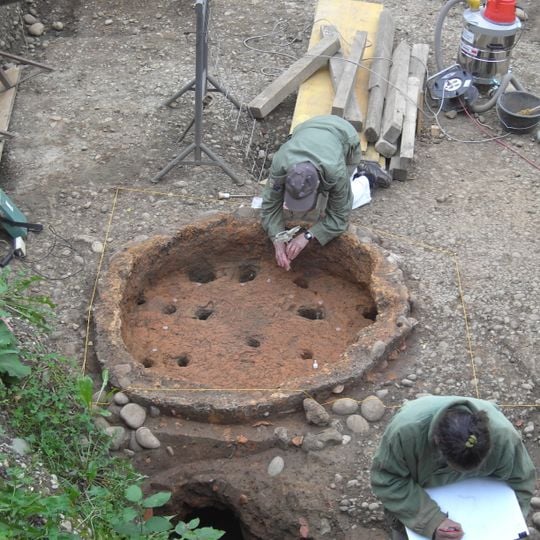
Vindonissa is an archaeological site at Windisch with the remains of a Roman legionary camp and a Helvetii oppidum on the plateau between the Aare and Reuss. The camp, rebuilt in stone by the 21st legion, covered 21 hectares within an irregular seven-sided wall. Excavations have uncovered barracks, baths, a valetudinarium, a Flavian peristyle house and the largest Roman amphitheater in Switzerland, with seating for about 10,000.
A Helvetii fortified village stood on the peninsula between the Aare and Reuss, protected by a wood-and-earth wall about 350 m long and a trench up to 7 m deep. Rome took control after 58 BC or 15 BC, and around 15 AD a legion camp was built. The Legio XIII Gemina held it until 44/45, the XXI Rapax rebuilt it in stone, and the XI Claudia stayed until 101. A castle followed in the 4th century.
The site was a meeting point where Roman soldiers and local residents lived side by side, with traces of homes, workshops, and market areas still visible today. This mixed community shaped daily life in the region and left behind evidence of a diverse society.
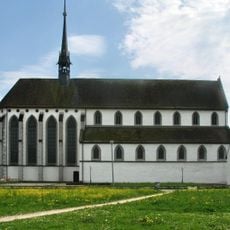
The Roman museum in Brugg displays finds from the camp, including the ceramic assemblage and amphorae from the Flavian peristyle house. On the grounds, look for the foundations of the west and north walls and the remains of a Roman bath. A 2 km Roman underground canal still feeds the fountain at Königsfelden Monastery.
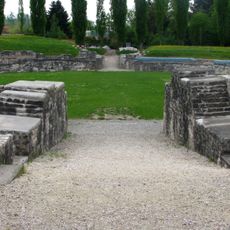
Vindonissa's amphitheater held about 10,000 spectators, the largest known in modern Switzerland. Its west and north wall foundations have been traced, and the site also preserves a 2 km Roman underground canal that still feeds the fountain at Königsfelden Monastery.
The community of curious travelers
AroundUs brings together thousands of curated places, local tips, and hidden gems, enriched daily by 92,783 contributors worldwide.