Former premonstratensian abbey and abbey church, Baroque abbey in Bellelay, Switzerland
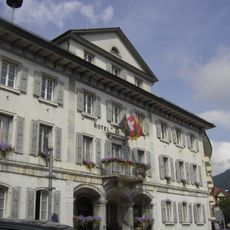
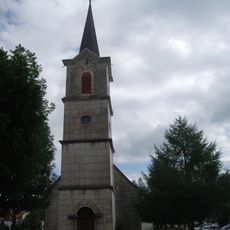
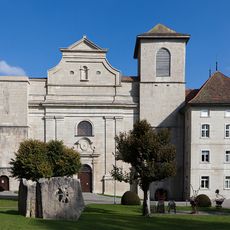
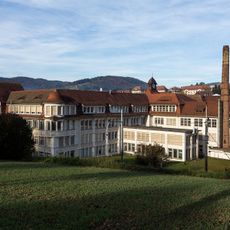
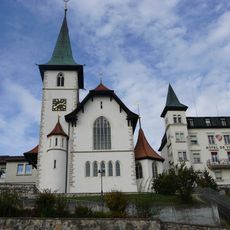
The former Premonstratensian abbey is a baroque structure with two towers and an interior richly adorned with stucco work and painted decorations by Wessobrunn School artisans. The complex consists of several buildings arranged around the church, forming an interconnected architectural ensemble.
Founded around 1136, probably at the initiative of Bishop Adalbero III of Basel, the Premonstratensian abbey was first documented in 1142. The present church was built by Franz Beer in 1708–1714, and the baroque convent buildings date from the early 18th century. In 1797 French troops occupied and secularised the monastery; in 1815 the Vienna Congress assigned Bellelay to the canton of Bern.
The church interior displays baroque artistic forms with elaborately decorated ceilings and walls created by Wessobrunn School artisans. This artistic work continues to shape how visitors experience the space and reveals how important craftsmanship was valued at the time.
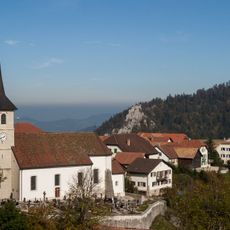
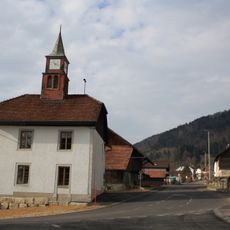
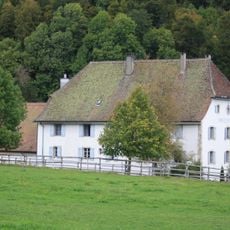
The abbey stands in the village of Bellelay, in the municipality of Saicourt in the Bernese Jura. The church and the baroque convent buildings are used by a psychiatric clinic, so some parts are not open to visitors. Since the late 1960s the abbatial church has hosted concerts and exhibitions run by the Fondation de l'Abbatiale de Bellelay.
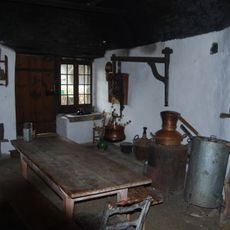
The canons of Bellelay are credited with inventing Tête de Moine, the "monk's head" cheese; cheese-making at the abbey is first documented in 1192. The name Bellelay itself comes from the legend of Siginand, who named it "belle laie", beautiful sow, after the boar he hunted.
The community of curious travelers
AroundUs brings together thousands of curated places, local tips, and hidden gems, enriched daily by 94,460 contributors worldwide.