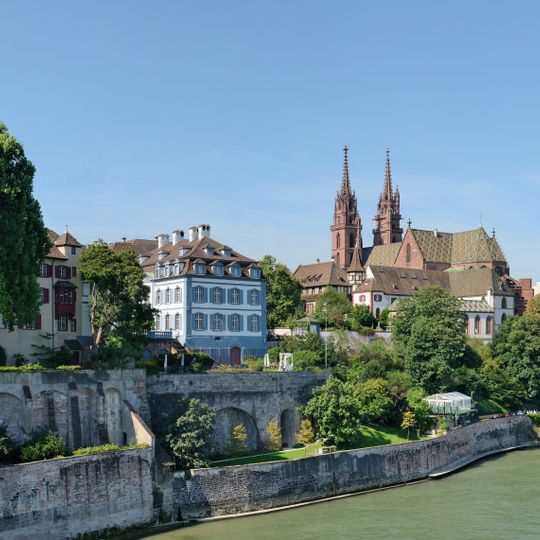
German-speaking Switzerland, Cultural and geographic area in Switzerland
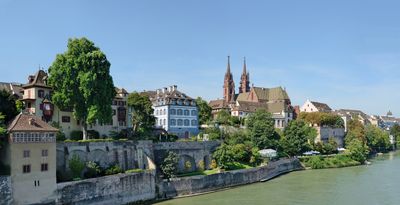
This cultural and geographic area covers seventeen cantons or parts of cantons across Switzerland, extending from Lake Constance to the Bernese Oberland and from Basel eastward into Graubünden. It takes in nearly all of the Swiss Plateau, large sections of the Alps, and the valleys around Zürich, Bern, and Lucerne.
The political union of these cantons into the Swiss Confederation took shape in 1848 with the adoption of a federal constitution, turning formerly independent territories into a single state. Before that moment, individual areas had maintained their own rules and alliances for centuries, until they agreed to join under a federal structure.
The region takes its name from the language spoken by inhabitants, who rely on local dialects rather than standard High German for everyday conversation. These spoken forms belong to the Alemannic branch and shift noticeably in sound and vocabulary from one valley or canton to the next, though speakers understand each other without difficulty.
The region is best explored by train, with frequent connections linking cities and most valleys and mountain areas well served by rail. In the Alps, carrying a map is helpful because not all villages are signposted consistently and hiking trails vary in accessibility depending on the season.
The municipality of Samnaun sits as the only settlement in this region where residents speak a Bavarian dialect instead of an Alemannic one, preserving a linguistic form otherwise found only in parts of Austria and Bavaria. This unusual characteristic stems from the valley's centuries of isolation, which delayed its integration into the rest of the country.
The community of curious travelers
AroundUs brings together thousands of curated places, local tips, and hidden gems, enriched daily by 92,247 contributors worldwide.