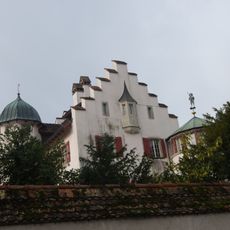
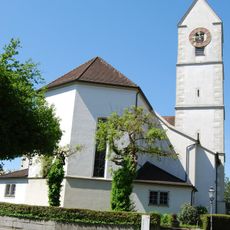
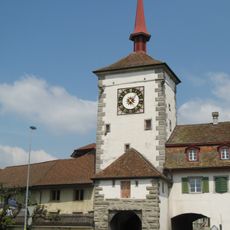
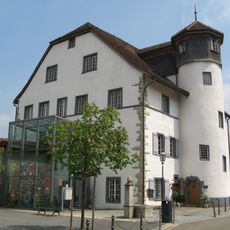
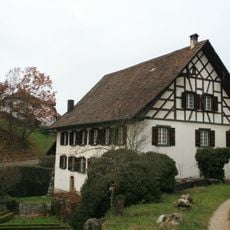
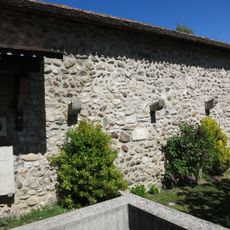
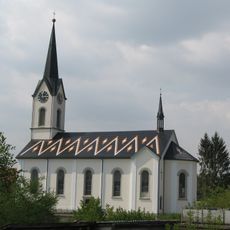
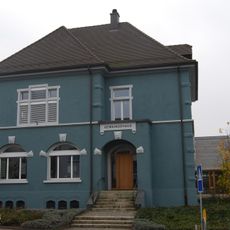
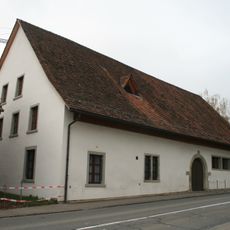
Former Cistercian monastery Gnadenthal, Cistercian monastery site near Niederwil, Switzerland.
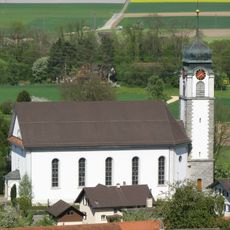
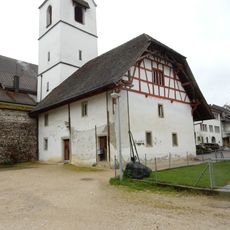
Gnadenthal monastery forms an irregular trapezoidal quadrangle around a cloister courtyard. The long, plain church (about 28 by 8 metres) stands on the east side, with an octagonal ridge turret and onion dome on its roof; the north wing faces the Reuss. The west tract, built in 1693, has two early-baroque portals on the street front.
The site was founded in the 13th century as a women's convent and followed Cistercian rules from 1310 under the guidance of Wettingen abbey. This monastic tradition shaped the monastery for centuries to come.
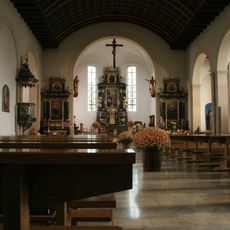
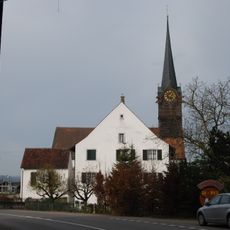
The monastery church, about 28 by 8 metres, has a plain exterior in Cistercian tradition and an octagonal ridge turret with an onion dome. Inside, seven round-arched side windows light the narrow nave and polygonal choir. Franz Xaver Wiederkehr made the main and two side altars in 1748 in Rococo style, partly reusing early Baroque figures; the 1795 organ stands between Rococo and Louis-seize.
The site operates today as a nursing home called Reusspark, while the cloister is open for exhibitions and the former refectory serves as a museum. Visitors should note that only publicly accessible areas can be viewed.
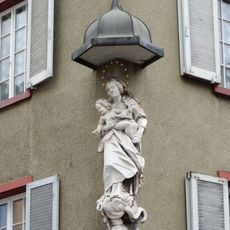
The abbess's room preserves a revered image of the Virgin Mary titled "Maria Hilf", which testifies to centuries of religious continuity in the monastery. This sacred object remained intact despite all the changes at this location.
The community of curious travelers
AroundUs brings together thousands of curated places, local tips, and hidden gems, enriched daily by 94,623 contributors worldwide.