Wettsteinbrücke, Road bridge in Basel, Switzerland
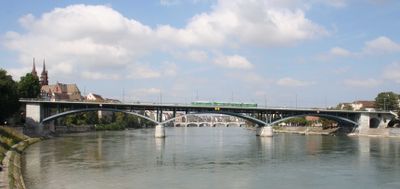
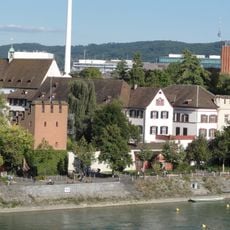
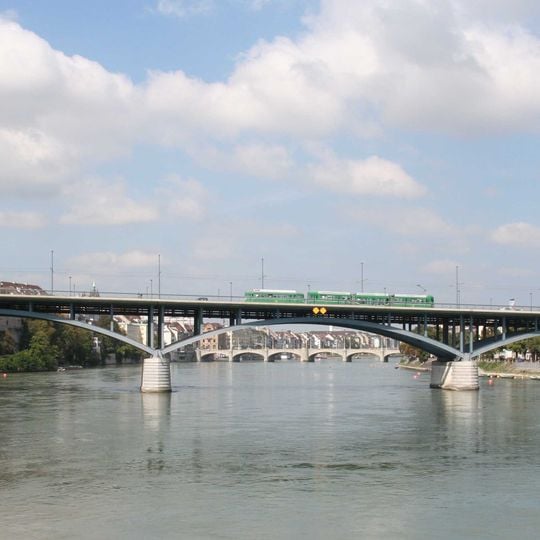
The Wettsteinbrücke is a road bridge over the Rhine in Basel, connecting the Grossbasel and Kleinbasel districts on opposite banks. It is built in concrete with an arched section over the river and has lanes for vehicles as well as walkways on both sides.
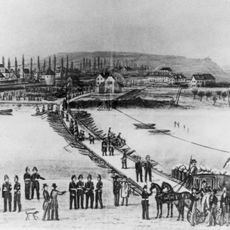
Built from 1877 by Philipp Holzmann and Gebrüder Benckiser, the Harzgrabenbrücke opened on 7 June 1879 and was renamed Wettsteinbrücke in 1881 after mayor Johann Rudolf Wettstein. Its 2.67% incline earned it the nickname "Schiefe Brücke". Widened from 12.6 to 21.5 metres in 1935–39, it was rebuilt from 1991 on the two original river piers.
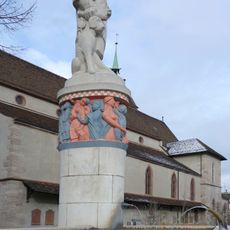
The bridge is named after Johann Rudolf Wettstein (1594–1666), Basel's mayor, a name it received only in 1881, two years after opening as the Harzgrabenbrücke. Four basilisks designed by sculptor Ferdinand Schlöth, each three metres tall and over five tonnes, crowned the abutments from 1880 until they were removed in 1936; one returned to the Grossbasel bridgehead in 1995 and faces away from the bridge.
The bridge is open to pedestrians, cyclists, and vehicles, and tram and bus lines cross it regularly throughout the day. Foot traffic is lighter on weekends, which makes the crossing more comfortable for those on foot.
The bridge's 2.67% gradient, needed to span the height difference between the Grossbasel and Kleinbasel banks, earned it the nickname "Schiefe Brücke" (slanted bridge); art historian Jacob Burckhardt publicly criticised its aesthetics. Four basilisks by sculptor Ferdinand Schlöth, each three metres tall and over five tonnes, crowned the abutments from 1880; removed in 1936, one returned to the Grossbasel bridgehead in 1995.
The community of curious travelers
AroundUs brings together thousands of curated places, local tips, and hidden gems, enriched daily by 92,983 contributors worldwide.