Parc la Mutta, Megalithic stone row in Falera, Switzerland
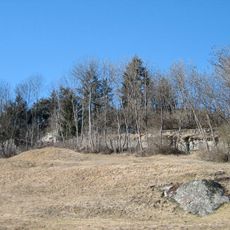
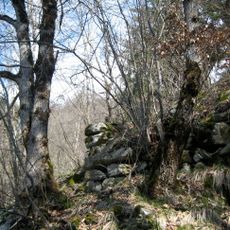
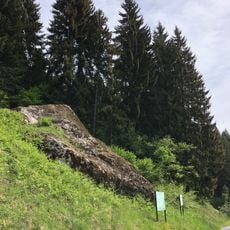
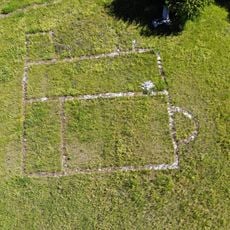
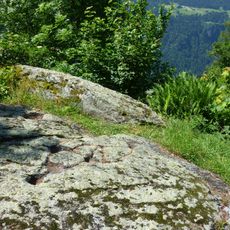
Parc la Mutta is a stone row of 36 menhirs, erratic blocks of granite or diorite, on the Planezzas plain at about 1250 m above Falera. The largest stone stands over two metres high. The main line of five menhirs runs slightly downhill to the northeast toward the Taminser Calanda; a second row of six blocks crosses it. Bowl-shaped cup marks are cut into several stones.
The stone rows were built in the Middle Bronze Age; radiocarbon dating of charcoal from a menhir's clay foundation yielded a range of 1500–1200 BC, though this single analysis is not definitive. District forester Walo Burkart first reported six column-like blocks in 1935, and J. Maurizio recognised the main line's astronomical alignment in 1948. In 1988, 27 fallen stones were located and re-erected under Ulrich Büchi, and nine more followed in 2000–2001.
The stones were placed by Bronze Age people who lived in this valley and likely used them to mark seasons and celestial events that mattered to their community. Walking along the row, visitors can sense how these people oriented themselves toward the sky and the land.
Begin your visit at the parking area north of the hill, where signs point out the path and provide background information. The site sits on level ground with clear trails that run alongside the stone formations, making it easy to walk the entire length.
The main row of five menhirs points toward the sunrise over the Taminser Calanda one month before and after the summer solstice. Two of its stones, with a third, form the corners of a Pythagorean triangle with sides in the ratio 8:15:17.
The community of curious travelers
AroundUs brings together thousands of curated places, local tips, and hidden gems, enriched daily by 94,521 contributors worldwide.