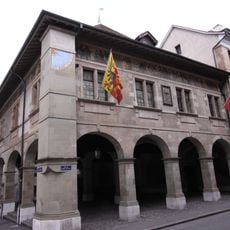
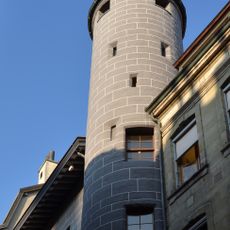
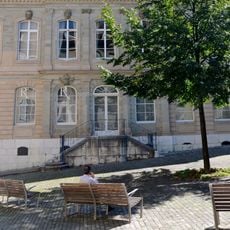
Barbier-Mueller Museum, Ethnographic museum in Old Town Geneva, Switzerland.
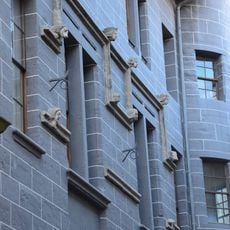
The Barbier-Mueller Museum occupies a townhouse at 10 rue Jean-Calvin in Geneva's Old Town. Founded in 1977, it holds over 7,000 works of tribal and classical antiquity: sculptures, fabrics and ornaments from civilisations worldwide, begun by Josef Mueller in 1907 and continued by his daughter Monique and son-in-law Jean Paul Barbier-Mueller.
The collection was started in the early 1900s by Josef Mueller, who gathered objects from non-European societies at a time when such pieces were rarely shown in museums. In 1977, the family opened the doors to the public, and the museum has stayed in the same building in Old Town Geneva since then.
Josef Mueller began collecting in 1906, after seeing a Rose Period Picasso portrait at a classmate's home; he later bought the painting. Advised in Paris by dealer Ambroise Vollard, he acquired a Cézanne, the Portrait of the Gardener Vallier, and by 1918 owned seven Cézannes, five Matisses and five Renoirs. From 1922 he added African pieces, and his son-in-law Jean Paul Barbier-Mueller shaped them into a coherent collection.
The museum sits in the heart of Old Town Geneva and is easy to reach on foot from the main city center. The rooms are relatively small and the collection is dense, so it is worth setting aside enough time to move through the floors without rushing.
The museum regularly sends traveling exhibitions to institutions around the world, which means many of its objects are seen far more widely than the size of the building in Geneva would suggest. It also produces detailed research catalogs that are used by scholars who may never visit the museum in person.
The community of curious travelers
AroundUs brings together thousands of curated places, local tips, and hidden gems, enriched daily by 92,715 contributors worldwide.