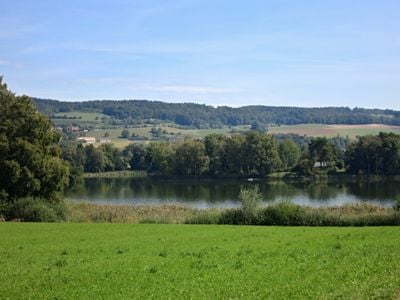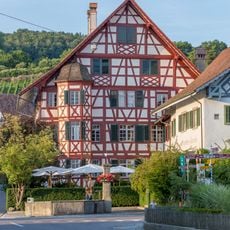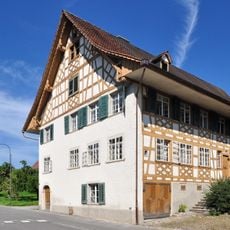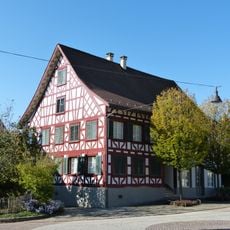
Nussbaumersee, Lake and archaeological site in Hüttwilen, Switzerland
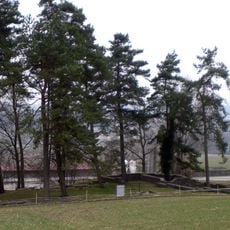
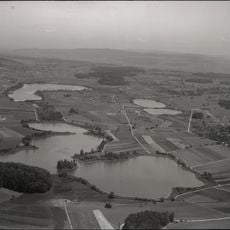
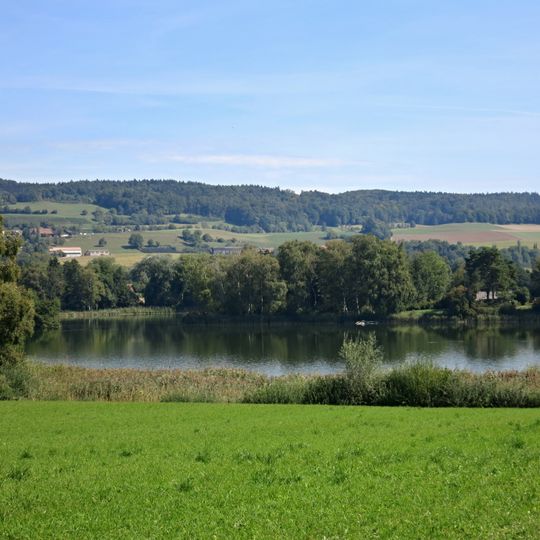
Nussbaumersee is a lake and archaeological site in Hüttwilen that lies between two larger bodies of water and preserves remains of ancient wooden structures beneath the surface. The lake's structure of shallow and deeper zones has protected these prehistoric remnants for thousands of years.
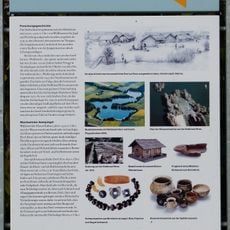
The Seebachtal was visited by hunters and gatherers in the Middle Stone Age, 9500–5500 BC. Around 1860 the first prehistoric piles were found near the «Inseli»; in 1943 about a fifth of a settlement area was uncovered. The site, suspected since 1900, is one of four Thurgau pile dwellings in the UNESCO World Heritage «Prehistoric Pile Dwellings around the Alps» since 2011. The Late Bronze Age village (870–850 BC) had about a hundred wooden houses of 10 to 25 m² on plank and clay floors, with pottery, jewellery and bronze, wood, stone or glass objects; it was abandoned when the lake rose.
The lake's name appears in several forms: Nussbommersee, Werdsee, Wertsee, Uerschhauser See and unterer See. Together with the Hasensee it once formed the Helfenberger or Ittinger Seen. Around 1860 the water level was lowered by three metres for farming, dividing the lake into three parts; since the mid-1990s the Stiftung Seebachtal has been restoring sections.
Access to the lake comes by foot through walking trails near Hüttwilen that connect to the surrounding landscape and offer various spots for nature observation. The best time to visit is on dry days when the trails are easy to walk on.
Beneath the water lie house remains so well preserved that researchers have found everyday items like tools and seeds inside them. These organic materials offer rare insight into the daily lives of the earliest inhabitants.
The community of curious travelers
AroundUs brings together thousands of curated places, local tips, and hidden gems, enriched daily by 94,027 contributors worldwide.